

Estimated reading time: 4 minutes
Key Takeaways
- The Royal Institution of Chartered Surveyors (RICS) launched the second edition of the Whole Life Carbon Assessment for the Built Environment (WLCA) standard, enhancing understanding of carbon costs in construction.
- This global standard targets all built assets and infrastructure throughout their lifecycle, promoting long-term thinking in reuse and recycling.
- The WLCA standard will significantly improve the industry’s ability to measure and manage its carbon output, vital as buildings account for 39% of global energy-related emissions.
- RICS encourages industry stakeholders to adopt this framework to develop practices that mitigate environmental impact.
- The new edition responds to over 1,300 public consultation responses, ensuring relevance and support across the built environment sector.
The Royal Institution of Chartered Surveyors (RICS) has launched the second edition of its Whole Life Carbon Assessment for the Built Environment (WLCA) standard.
First published in 2017, the 2023 edition is a global version of the standard that RICS says ‘provides a considerably more developed understanding of the carbon costs and benefits of design choices in construction and infrastructure projects and assets’.
Its publication follows a public consultation held in March 2023 which received more than 1,300 responses. RICS says it has updated the standard to be used globally and to cover all built assets and infrastructure projects throughout the built environment lifecycle.
Framework Design
RICS describes the standard as a ‘framework designed to encourage long-term thinking through reuse, recycling and redevelopment’ that ‘is relevant not only to those undertaking carbon assessments but also to clients, investors, and property managers’.
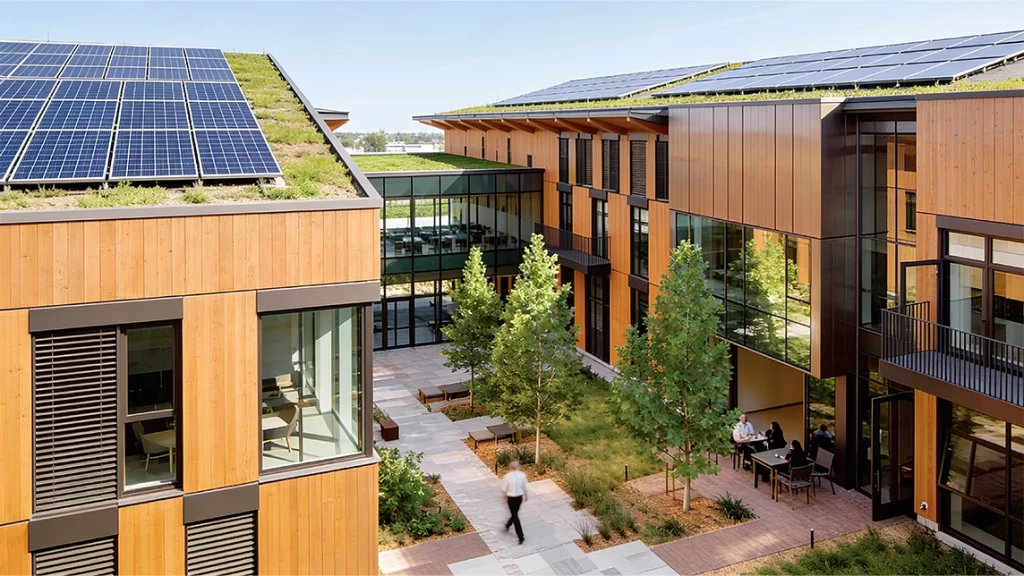
As a core principle Tamlite are committed to contributing towards the achievement of net zero targets.
Our approach involves reducing waste production, reusing materials repeatedly, recycling to create new products, and recovering energy from waste.
Commenting on the new standard, RICS Chief Executive, Justin Young, said: “The second edition of Whole Life Carbon Assessment for the Built Environment encapsulates RICS’s role as a global leader in the built environment and its duty to steer the industry towards decarbonisation.
“This second edition is a truly global standard for a global problem. I want to thank our members from every world region, our staff, partner specialists and the Department for Transport and Net Zero Waste Scotland for their hard work and crucial support, which made this a reality.”
Charlotte Neal, RICS director of surveying standards, added: “The built environment has been crying out for tools to measure its impact on climate change, which is crucial for developing mitigating practices to significantly reduce the industry’s carbon output.
Carbon Output
“By providing a consistent methodology to assess the carbon output of buildings throughout their entire lifecycle, the second edition of WLCA will significantly improve the industry’s ability to measure and manage its impact on climate.”According to the World Green Building Council, buildings are responsible for 39% of global energy related carbon emissions, with 28% of those from operational emissions, including lighting.
- Watch RICS’ video about the new standard
- Download RICS 2023 (second edition) Whole Life Carbon Assessment for the Built Environment (WLCA) standard
Frequently Asked Questions
The WLCA is a standard published by the Royal Institution of Chartered Surveyors (RICS). The second edition is a global framework designed to provide a more developed understanding of the carbon costs and benefits of design choices across all built assets and infrastructure projects throughout their entire lifecycle.
The framework is designed to encourage long-term thinking through reuse, recycling, and redevelopment. It is relevant to professionals undertaking carbon assessments, as well as clients, investors, and property managers looking to measure and manage an asset’s impact on climate change.
According to the World Green Building Council, buildings are responsible for 39% of global energy-related carbon emissions, with 28% coming from operational emissions, including lighting. The WLCA standard provides a consistent methodology to assess this output, which helps the industry develop mitigating practices to significantly reduce its carbon footprint.