
Estimated reading time: 5 minutes
Key Takeaways
- The UK government bans the sale of T5 and T8 fluorescent lamps from 1st February 2024 as part of the fluorescent lamps ban.
- Previous phased bans on T8 tubes began in September 2023 due to their inefficiency and mercury content.
- Switching to energy-efficient LED lighting helps reduce energy costs and supports ESG goals for organisations.
- LEDs last longer and consume up to 80% less energy compared to fluorescent lamps, offering cost-effective maintenance benefits.
- This phase-out aligns with broader energy efficiency strategies following the EU’s RoHS Directive prohibiting these lamps.
From 1st February 2024, the government put a ban in place for the UK sale of T5 and T8 linear fluorescent lamps.
These are the last in a series of phased bans aimed at removing high energy fluorescent lamps from shop shelves in the UK; fluorescent T8 Tubes (2-foot, 4-foot, and 5-foot) were banned from sale on the 1st September 2023, other T8 lengths were banned from 2nd September 2023.
The Government brought these into effect for two main reasons. Firstly, fluorescent lamps are inefficient and, secondly, they contain the toxic substance mercury.
However, the lamps remain in widespread use across the country. Yet the built environment needs to help accelerate the Government’s aim of a ‘brighter and cleaner’ future for lighting. Now is the time for facilities managers and building owners to act and review their existing fluorescent lighting systems in line with Net-Zero aims.
Importantly, switching from energy guzzling fluorescent lamps to efficient LED alternatives can help organisations reduce their energy demands and energy costs. This also helps meet the environmental element of any ESG (Environmental Social Governance) goals in place. This matters because a robust ESG strategy is an increasingly important component for business growth.
Fluorescent lamps: outdated and inefficient
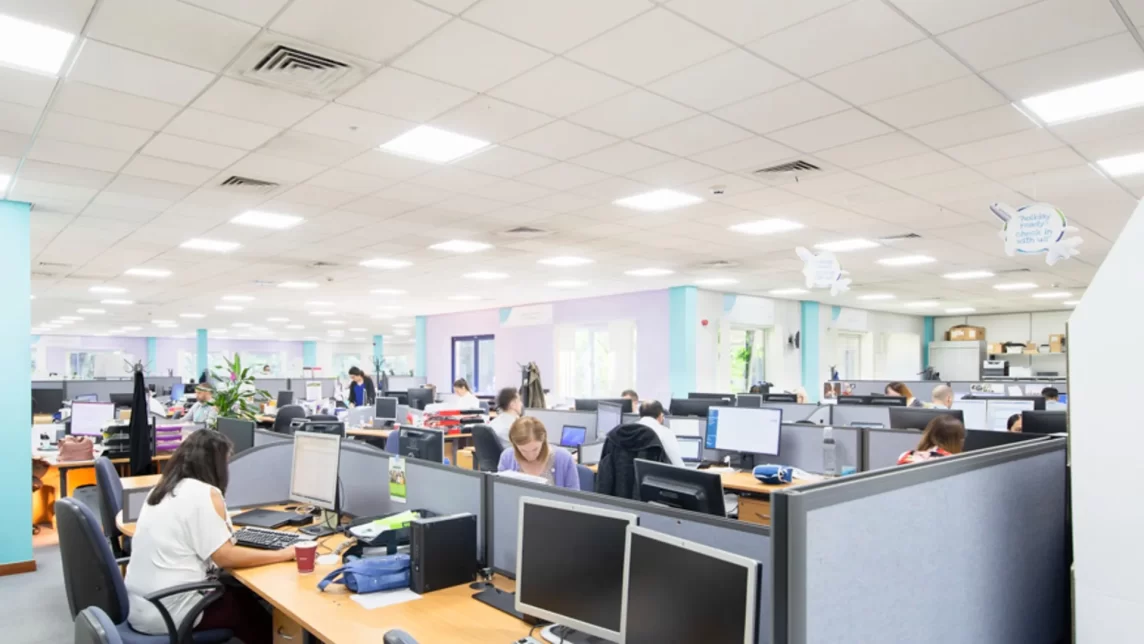
Fluorescent lighting has been prevalent in commercial, educational, healthcare, manufacturing, and other settings ever since it was introduced in the 1930s.
Its popularity was due to its characteristic of providing very even illumination over a wide area rather than from a small and intense source.
Phasing out fluorescent lamps is part of a much broader and tighter energy efficiency strategy for electrical appliances. The Government announced a phase-out of higher energy halogen lightbulbs in 2018. This saw the complete ban of halogen bulbs for household use come into effect in September 2021 – and a push towards more energy efficient LED lights.
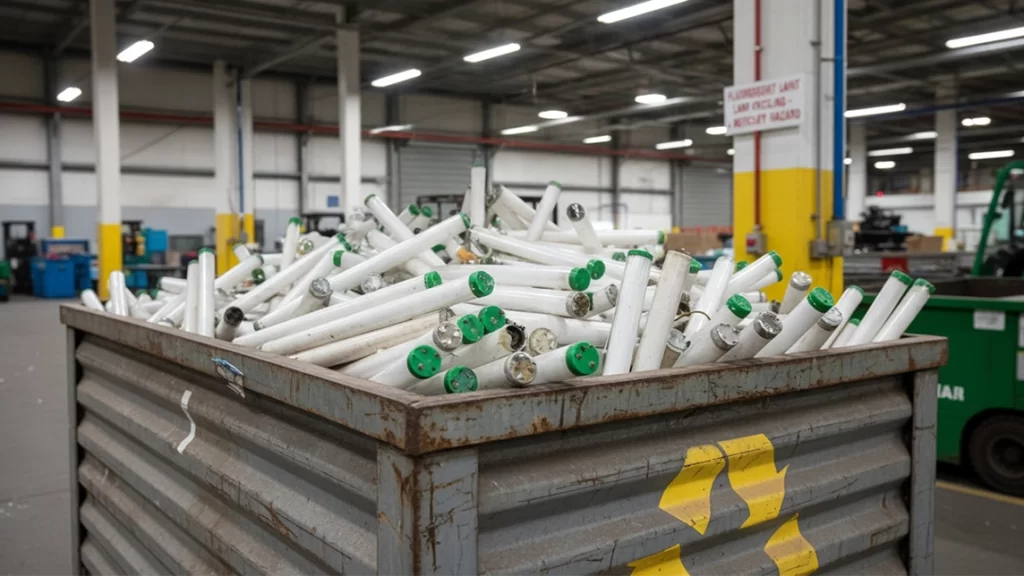
Mercury: A hazardous substance used in fluorescent lamps
Fluorescent lamps contain mercury which is a toxic element. The use of mercury in products has been banned, by the EU, since 2009. But, until recently, the small amount used in certain lamps has been tolerated. This exception no longer exists within the EU (and the UK will soon follow). On 24th August 2023, under the EU’s Restriction of Hazardous Substances (RoHS) Directive, it became forbidden to produce or import fluorescent tubes and lamps inside the EU. This directive is part of the reason that the UK is phasing-out fluorescent lamps from 1st February 2024. The Lighting Industry Association has produced a guidance note for the respective EU and UK phase-out dates for fluorescent tubes lengths.
Transitioning to LEDs: Sustainable lighting that achieves ESG goals
Many organisations have made the switch to more energy efficient LED lighting in recent years and, currently, around two thirds of all luminaires sold in Britain are LED. There are still hundreds of thousands, perhaps millions (no official estimates exist) of fluorescent fixtures used across the country in schools, hospitals, offices, shops, and other buildings.
Switching to LED represents a relatively small, yet cost effective, sustainability gain as well as a health and safety gain. They use up to 80% less energy than fluorescent lamps and can last anywhere between two to four times longer than their fluorescent counterparts. As well as delivering increased performance and having a longer life, LED lighting has an easier maintenance regime, with extended intervals between servicing. LED lighting is also made of components that can be recycled, helping to reduce waste – and reducing waste is another vital component of any ESG strategy.
By delivering energy and carbon savings, a switch to efficient LED lighting can help fulfil the environmental element of any organisations’ ESG strategy. This ultimately offers progress towards net zero goals.
- Tamlite Lighting has long promoted good sustainability practice within the company and wider lighting industry, ensuring a healthy planet for all.
Frequently Asked Questions
The UK government implemented a ban on the sale of T5 and T8 linear fluorescent lamps on 1st February 2024. This followed previous 2023 phased bans, which removed 2-foot, 4-foot, and 5-foot T8 tubes from shelves on 1st September, and all other T8 lengths on 2nd September.
The Government introduced these bans for two main reasons: fluorescent lamps are highly inefficient, and they contain mercury, which is a toxic substance. This phase-out aligns with the UK’s broader energy efficiency strategy for electrical appliances and follows the EU’s RoHS Directive, which prohibited the production and import of these lamps in August 2023.
Upgrading to LEDs helps businesses reduce energy demands and carbon output, directly fulfilling the environmental criteria of an ESG strategy. Furthermore, LED components can be recycled. This actively reduces waste, which is another vital component for a robust ESG strategy and long-term business growth.
LEDs represent a highly cost-effective sustainability and safety gain. They use up to 80% less energy than fluorescent lamps and last two to four times longer. This superior lifespan, combined with an easier maintenance regime and extended servicing intervals, delivers significant operational savings.