
Estimated reading time: 7 minutes
Key Takeaways
- The Energy Savings Opportunity Scheme (ESOS) aims to improve energy efficiency and reduce emissions in large organisations, with a new compliance deadline of 5th June 2024.
- Phase 3 of ESOS introduces stricter requirements, including reducing the de minimis exemption from 10% to 5%, necessitating better energy consumption accounting.
- Organisations must outline a detailed plan for energy-saving measures and share ESOS report findings with subsidiaries for a cohesive strategy.
- Upgrading to LED lighting is an effective way to meet ESOS regulations, as LEDs use up to 80% less energy and require less maintenance.
- Smart lighting controls further enhance energy savings by automatically managing lighting based on occupancy and natural light, achieving savings of 60% to 80%.
The Energy Savings Opportunity Scheme (ESOS) is a mandatory government initiative aimed at improving energy efficiency and reducing greenhouse gas emissions within large organisations. With the recent extension of the ESOS Phase 3 deadline to 5th June 2024, the Environment Agency (EA) has introduced new requirements designed to further enhance the scheme’s impact.
In this article, we cover the essential updates to ESOS regulations and how lighting plays a pivotal role in helping your organisation achieve compliance.
Why was the ESOS Phase 3 deadline extended?
The decision to extend the Phase 3 deadline stems from requests made by stakeholders and aims to provide assessors with more time to conduct thorough assessments. This extension does not alter the qualification thresholds, making ESOS applicable to all organisations classified as large undertakings on 31st December 2022. Despite the compliance date extension, it is essential for organisations to prepare for the new, more rigorous requirements.
ESOS Phase 3: The new requirements
The upcoming changes in ESOS Phase 3 introduces several additional requirements. One of the most significant changes is the alteration to the de minimis (partial exemption) rule. In Phases 1 and 2, organisations could exclude certain sources of energy-consuming activity up to 10%. However, in Phase 3, this maximum is reduced to 5%, meaning that a higher percentage of significant energy consumption must be accounted for.
Moreover, organisations will need to provide a more detailed, time-bound plan for implementing recommended energy-saving measures. This new requirement will encourage businesses to not only identify opportunities but also commit to concrete actions within a specific timeframe. Organisations can make quick, significant improvements to energy consumption simply by replacing older bulbs with highly efficient LED lighting. They use up to 80% less energy than traditional fluorescent lighting – which means you see big changes, fast.
The government is also developing a template for the submission of ESOS compliance information. While there was no template for Phase 1 and 2 of ESOS, the government has announced there will be a template for reporting in Phase 3. This template will streamline the reporting process and align organisations with standardised reporting practices. Once it is released, this change is expected to simplify the compliance process for many organisations. Register here to receive timely updates on compliance, including ESOS, as well as news, guidance, and technical information focused on lighting, energy, sustainability, and the built environment.
Furthermore, the requirement for parent organisations to share ESOS report findings with subsidiaries underscores the importance of a holistic approach to energy efficiency. This sharing of information ensures that subsidiary companies are aware of energy-saving opportunities and can work collectively to achieve energy efficiency targets. Particularly when working across multiple subsidiaries and estates, a cohesive energy reduction strategy is key.
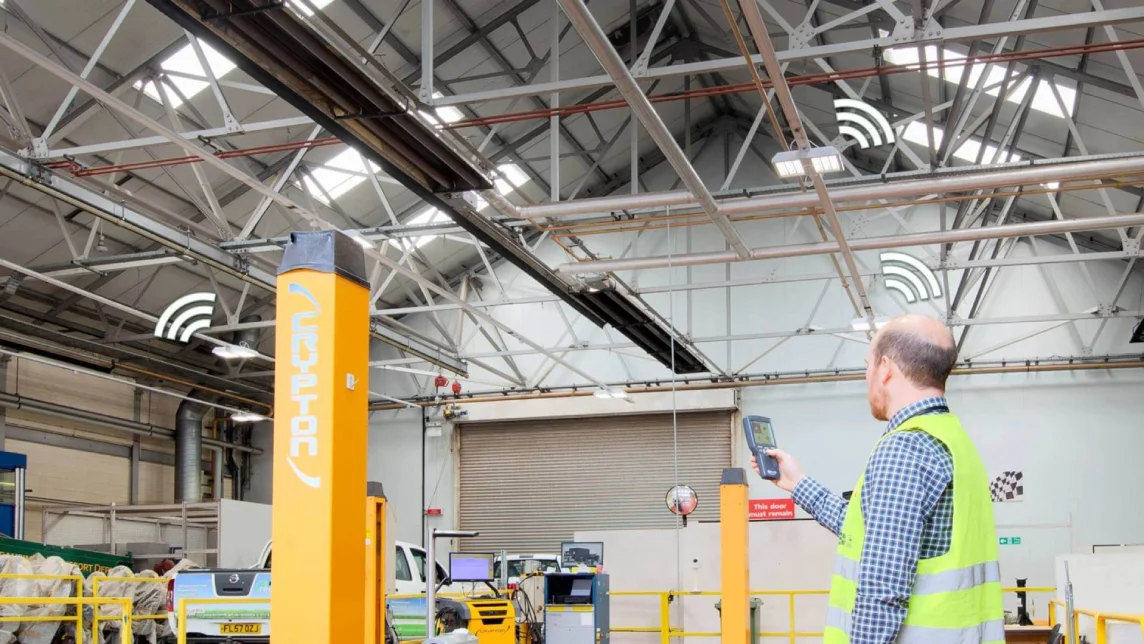
Smart lighting helps organisations take control of their lighting systems across multiple rooms and buildings – managing lighting based on natural light and room capacity – and thereby reducing energy consumption. (mention how smart lighting allows you to manage your estate).
Looking ahead to ESOS Phase 4
With the impending changes to ESOS Phase 3, the government is committed to strengthening the scheme to enhance energy efficiency and environmental sustainability. As organisations adapt to these changes, it is important to keep an eye on the horizon. ESOS Phase 4 is likely to introduce further improvements and requirements, building on the foundation laid by Phase 3.
How lighting can help achieve ESOS compliance
Complying with ESOS means that organisations will not only have to assess where they are over-consuming energy, but they will also have to find solutions for energy reduction. One of the fastest and most effective ways to do this is by installing more efficient lighting, specifically upgrading to LEDs.
Other options for improving lighting efficiency include the introduction of control-based technologies that can automatically switch lights on and off based on room occupancy. In a world where hybrid work patterns are causing a surfeit of empty spaces, it is vital to integrate technology that can ‘flex’ to the new spatial usage patterns – and thereby significantly reduce energy waste.
Lighting Controls
By replacing outdated lighting with modern LED systems, coupled with lighting controls, buildings can be made more efficient, generating savings of between 60% to 80%. LED luminaires also have a life expectancy that is 20 times longer than traditional bulbs lamp sources and can function for over 50,000 hours before having to be replaced. Less maintenance means an additional contribution to the savings calculation – and enhances the returns on investment.
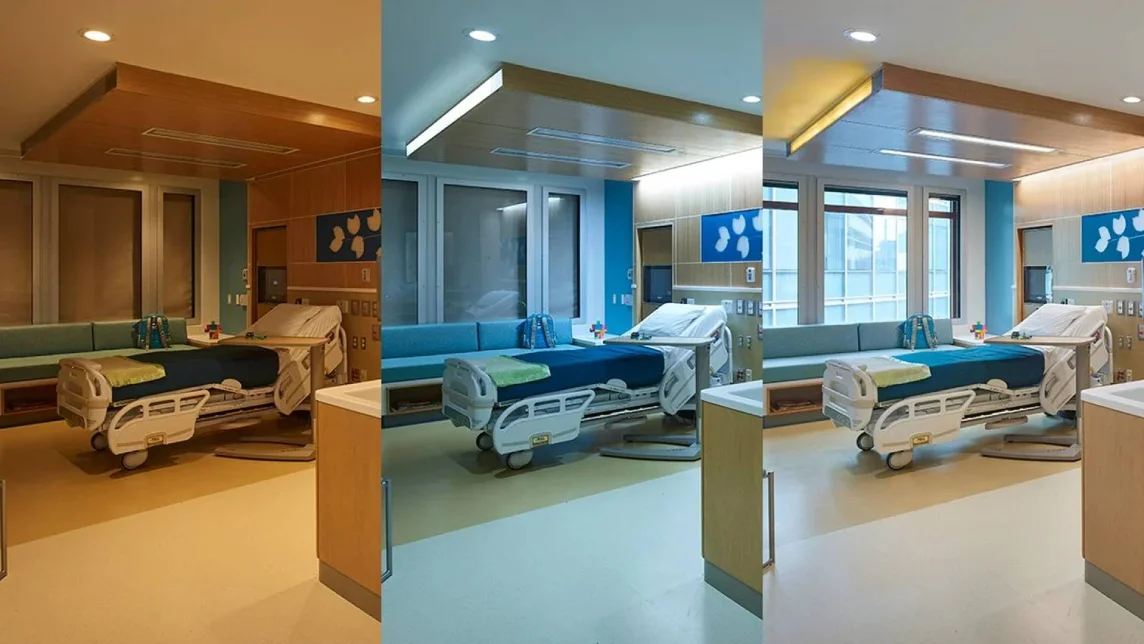
Lighting controls can offer a multitude of benefits. Options include switching, dimming, changing the colour temperature (e.g., Human Centric Lighting) and setting static lighting scenes. The lighting can be adjusted manually and individually based on the time of day and your activities. By adjusting the colour temperature to create a warm or cold light, you can optimise comfort and enhance your overall well-being.
Adjusting Light Levels
Controls are ideal for settings that require circadian or dynamic lighting. They can adjust light levels automatically, dependent on movement and daylight, on calendar and time of day, and can automatically create different light scenes. These controls enable you to save energy effortlessly, with automatic dimming that adjusts based on available daylight or the absence of movement in the room. Predefined lighting profiles and scenes are automatically activated based on the time of day and events.
While meeting ESOS compliance may seem challenging, incorporating more energy-efficient lighting and lighting controls is a guaranteed method to decrease energy usage, save money, and enhance overall efficiency.
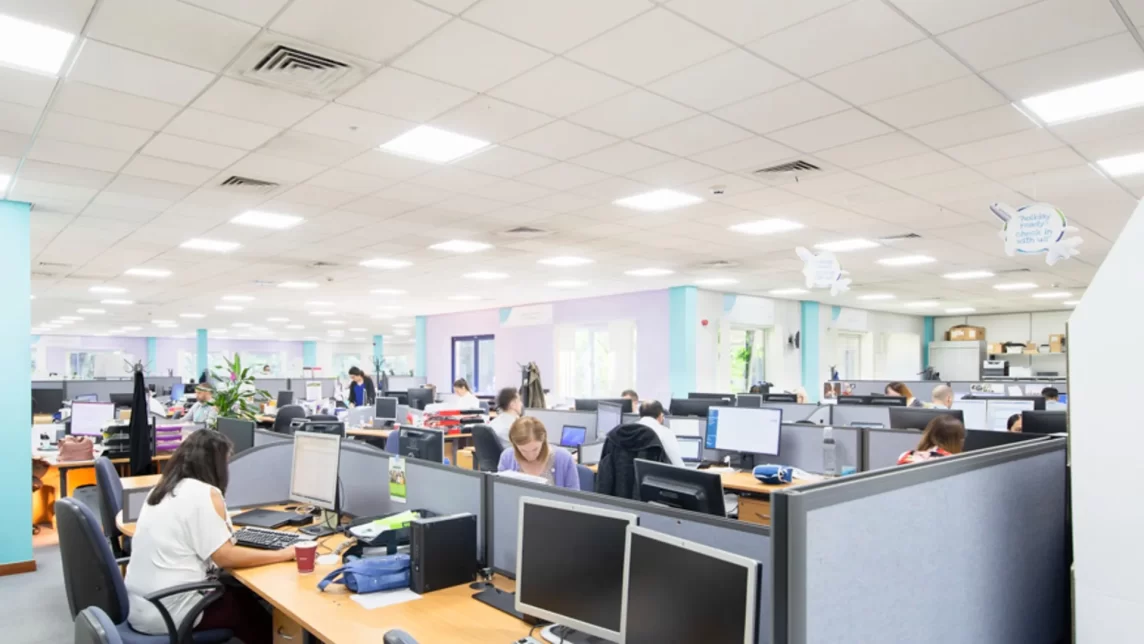
Aligning your energy and lighting systems to ESOS also has another added benefit: Good lighting supports the health and wellbeing of building occupants. Research from Cornell University found that offices with good lighting saw employees take 6.5% fewer sick days and boosted their productivity. Lighting and wellbeing inextricably go hand and hand, while simultaneously contributing to lower energy consumption.
Frequently Asked Questions
The extension was granted following requests from stakeholders to give assessors more time to conduct thorough energy assessments. The extension did not alter the qualification thresholds, meaning it still applied to all organisations classified as large undertakings on 31st December 2022.
Phase 3 introduced several rigorous updates:
The de minimis exemption rule was reduced from 10% to 5%, requiring a higher percentage of significant energy consumption to be accounted for.
Organisations must provide a detailed, time-bound plan for implementing energy-saving measures.
A new standardised reporting template will be mandatory to streamline compliance.
Parent organisations must share ESOS report findings with their subsidiaries to foster a cohesive energy reduction strategy.
Upgrading to LEDs is one of the fastest ways to reduce over-consumption. Highly efficient LEDs use up to 80% less energy than traditional fluorescent lighting. Furthermore, they have a life expectancy 20 times longer than traditional lamp sources, functioning for over 50,000 hours, which significantly reduces maintenance costs and boosts your return on investment.
Smart lighting controls allow organisations to manage entire estates across multiple rooms and buildings by automatically adjusting to natural light and room capacity. Features like occupancy sensors and automatic daylight dimming ensure lights are only used when needed. Combining LEDs with these controls makes buildings highly efficient, generating overall energy savings of 60% to 80%.