
Estimated reading time: 4 minutes
Key Takeaways
- To achieve net-zero, the lighting industry must focus on intelligent lighting design rather than uniformity.
- Post-COVID, fewer people will be at their desks, making dynamic lighting solutions more relevant.
- Lighting should enhance wellbeing, productivity, and health, prioritising people over mere aesthetics.
- Net-zero buildings must produce as much energy as they consume, reducing waste is crucial.
- Intelligent schemes should consider long-term maintenance costs to save energy and improve productivity.
Helping the world to reach net-zero is the goal of any technical manufacturer. But when it comes to lighting, are more rule-breaking methods needed to help achieve it quicker?
Uniformity is regarded as a key component in lighting design. But with the shift in corporate lighting design as a result of COVID, there is an argument that isn’t as necessary as it used to be.
Office Space
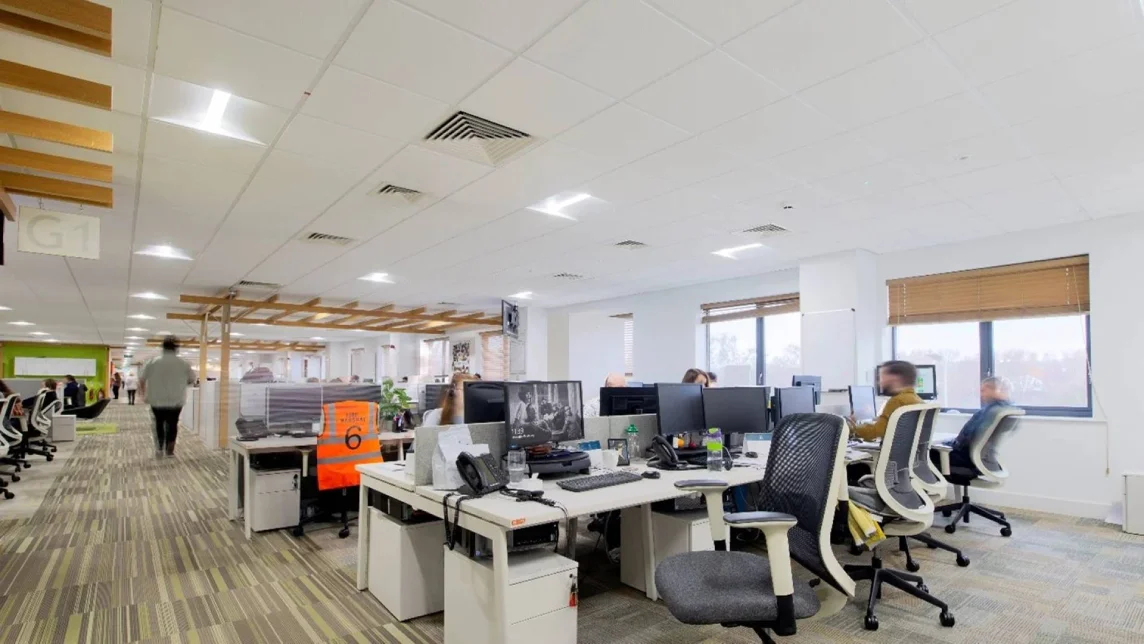
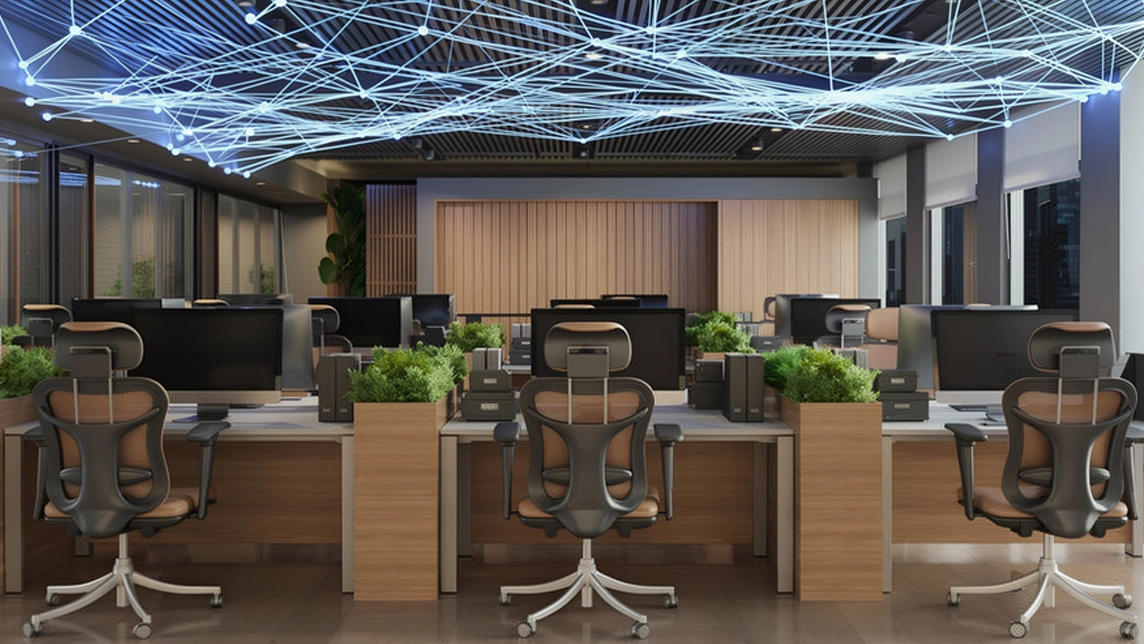
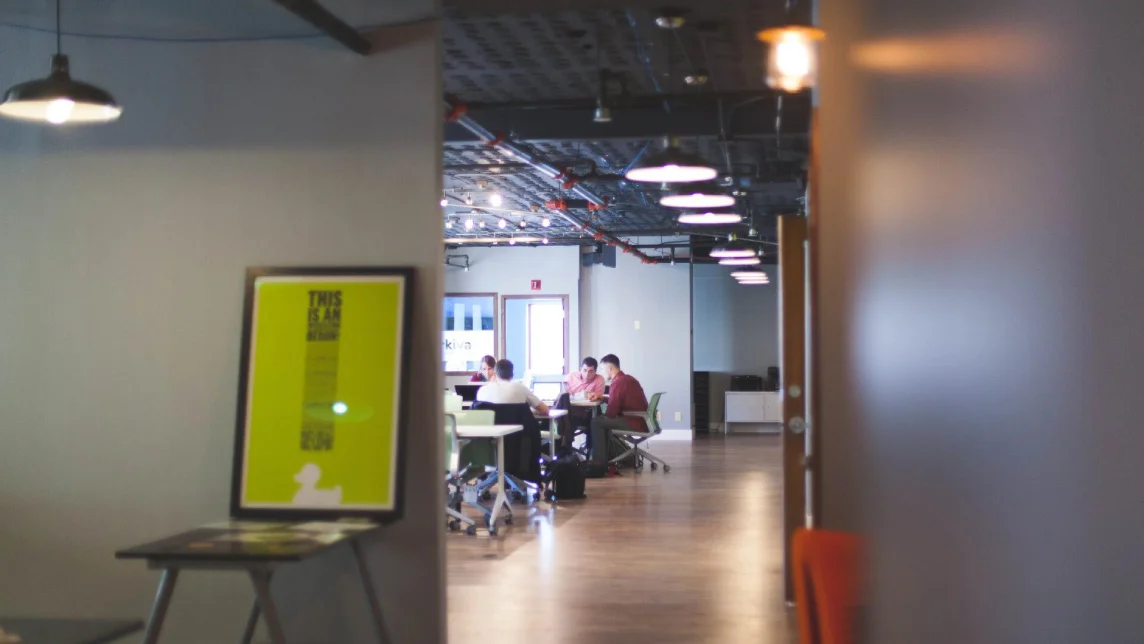
Pre-pandemic, the task area of a workplace accounted for 24% of the office space.
At any given time only 60% of people are sitting at their desk at some point throughout the day.
Whilst the calculations have not been finalised, the number of people at their desk will undoubtedly be reduced.
To demonstrate the value of lighting we need to look at its benefits. This means looking at creating wellbeing, productivity, health and an overall focused environment with lighting. The focus now must be on intelligent lighting design that brings a wave of benefits rather than just ticking boxes.
Sustainability
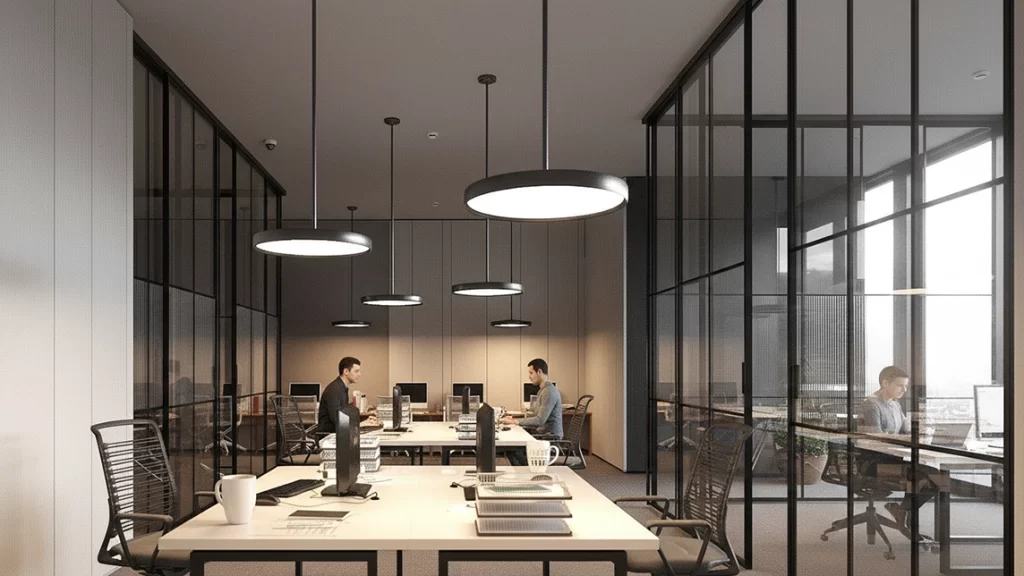
Net-zero is brought about when all buildings focus on sustainability. Sustainable buildings are not just focused on an impressive design but a commitment to creating a healthy and economically viable space.
Not only this, but intelligent schemes must look at the long-term costs of maintenance in order to help save energy and enhance productivity. And so, uniformity may not be as crucial to achieving this as once thought.
Net-Zero Buildings
The definition of net-zero buildings is one that produces as much energy as it consumes. So, reducing waste is as important as luminaire efficiency and this means a closer focus on intelligent lighting design.
In a workplace or corporate space, prioritising task lighting over ‘light if needed’ means building lighting for people and their habits. This focus may now need to be on lighting for people rather than the spaces themselves.
This may just bring about net-zero more than a project designed solely to specification could.
You can read further into how Tamlite are helping retrofit buildings for the future here.
Uniformity has traditionally been a key component of lighting design, but shifts in corporate office usage following the COVID-19 pandemic suggest it may no longer be as crucial as once thought. Pre-pandemic, task areas accounted for only 24% of office space, and data indicated that at any given time, only 60% of people were seated at their desks. With desk occupancy likely to decrease further, the industry is shifting its focus toward intelligent lighting design that prioritizes human wellbeing, health, and productivity rather than simply adhering to traditional uniformity standards.
To achieve net-zero, buildings must reduce waste as effectively as they increase luminaire efficiency. By prioritizing task-specific lighting or “lighting for people and their habits” rather than lighting entire spaces by specification, designers can significantly reduce unnecessary energy consumption. This intelligent approach to lighting design is considered a more effective route to achieving net-zero than projects designed solely to meet rigid, traditional specifications.
Sustainable buildings must commit to creating spaces that are both healthy and economically viable. Intelligent lighting schemes should focus on:
Creating environments that foster wellbeing, productivity, and focus.
Accounting for long-term maintenance costs to help save energy.
Transitioning the focus from lighting spaces to lighting specifically for the people using them.