
Estimated reading time: 3 minutes
Key Takeaways
- Traditional wired lighting networks require extensive cabling, leading to higher costs for contractors and designers.
- Switching to a smart lighting system offers flexibility and future-proofing, allowing easy scalability and management of multiple buildings.
- Modern systems support scheduled emergency self-testing, reducing disruption during routine checks.
- Key benefits of a smart lighting network include live energy monitoring, luminaire status reporting, and emergency lighting testing.
Traditionally, creating a smart lighting network involved using wired connections between luminaires. While the benefits of such networks – often controlled using the DALI protocol – can be considerable, they can also lead to significant additional cabling requirements for contractors and designers, with all the attendant cost implications that would be expected.
The benefits of moving from a wired to wireless infrastructure are extensive and begin with the luminaire itself.
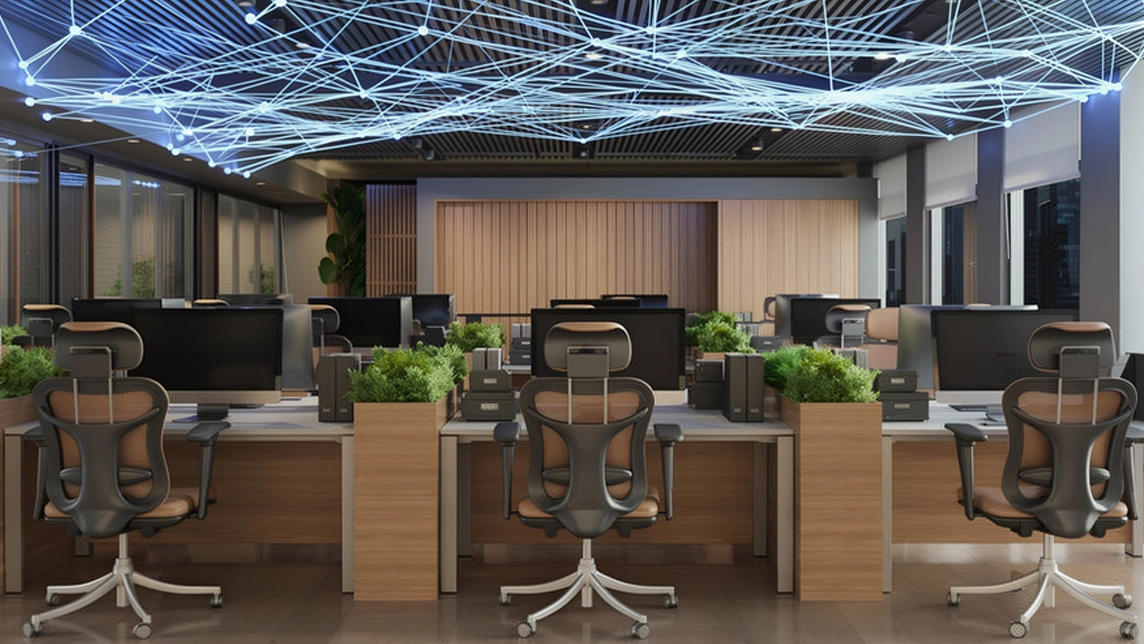
Connected Lighting Network
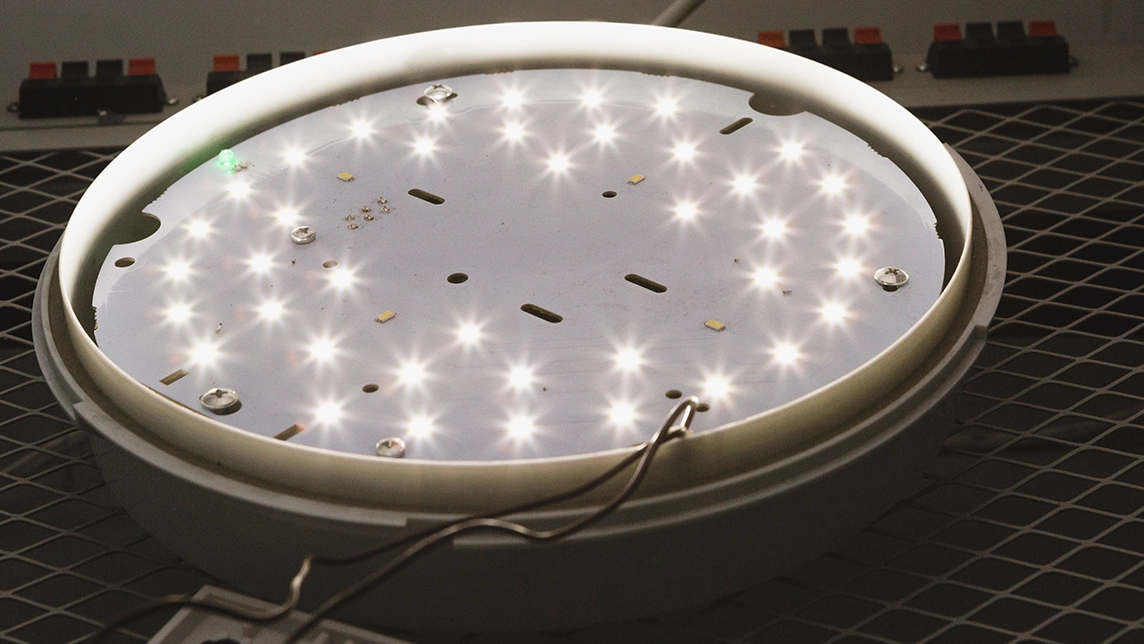
In a wireless system, integrated wireless nodes are housed within the luminaire and communicate with each other, removing the need for a connected network with substantial cabling requirements.
Not only do wireless systems facilitate greater flexibility in the present, they also ensure future-proofing. With the extra cabling needs removed, networks can be scaled up with a minimum of fuss, while additional spaces or even separate buildings can be brought under the control of the same system.
Intelligent Lighting
Another advantage with the latest generation of systems is that they often support scheduled emergency self-testing. With legacy systems, routine monthly and annual tests were often conducted at random intervals, resulting in potentially significant disruption to day-to-day activities. Newer systems allow mandatory tests to be scheduled for periods when a building has reduced or even no occupancy at all.
The benefits associated with a smart lighting network include:
- Live energy monitoring
- Luminaire status reporting
- Emergency lighting testing and reporting
- Controlling sensors
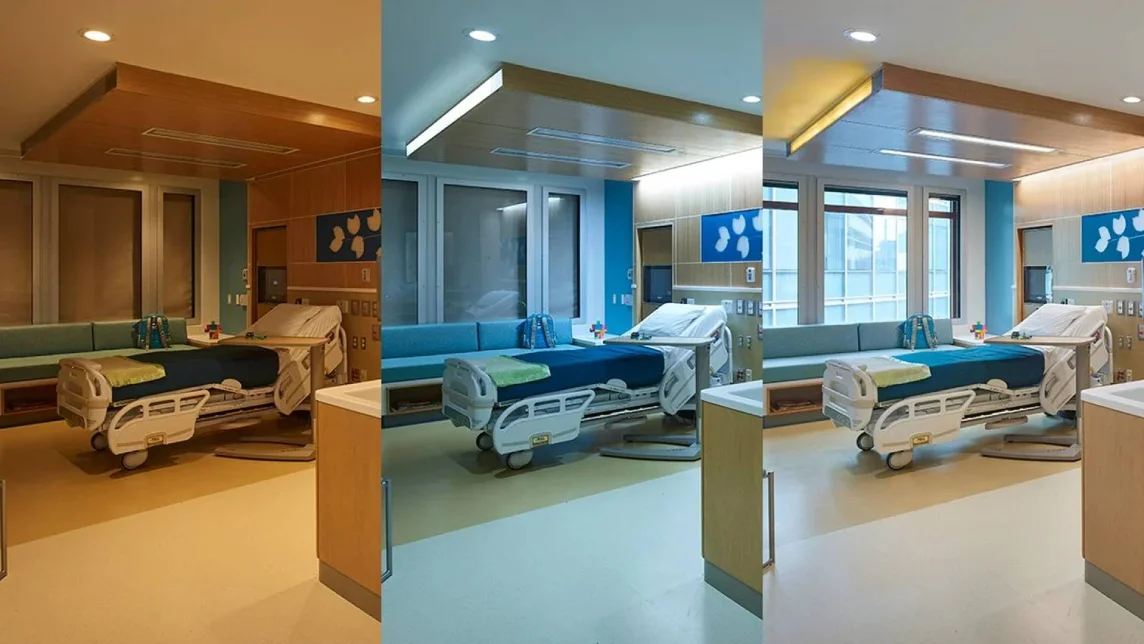
- Set room scenes
For more information on lighting networks, visit our Vision Lighting Controls.
Frequently Asked Questions
Traditional connected lighting networks typically use wired connections, often via the DALI protocol, which requires significant additional cabling and creates higher cost implications. In contrast, a wireless system uses integrated nodes housed within the luminaires to communicate with each other, removing the need for substantial cabling.
Wireless systems offer greater flexibility because they eliminate extra cabling needs. This allows networks to be scaled up with a minimum of fuss, making it easy to bring additional spaces or even separate buildings under the control of the same lighting system.
In legacy systems, routine monthly and annual tests were often conducted at random intervals, causing disruption to day-to-day activities. Newer wireless systems support scheduled emergency self-testing, allowing mandatory tests to be performed when a building has reduced occupancy or is completely unoccupied.