

Estimated reading time: 4 minutes
Key Takeaways
- LED technology significantly reduces energy consumption, but smart lighting solutions enhance these savings even further.
- Integrating smart lighting with LED systems can lead to energy bill savings of 60% to 80%, aiding both cost reduction and decarbonisation.
- Despite their benefits, businesses are hesitant to adopt smart lighting solutions due to perceived high costs and complexity in implementation.
- Smart systems offer unmatched flexibility and adaptability for various environments, ensuring efficient energy use by using sensors and wireless networks.
- Tamlite’s Vision Lighting Controls provide scalable and quickly installable smart lighting solutions, making them suitable for large estates.
It’s universally accepted that LED technology has the ability to greatly reduce energy consumption. But when paired with smart lighting solutions, this can go even further.
While LEDs are undoubtedly the energy efficient option, the savings that can be made and the overall ROI when paired with innovative lighting controls is significant. Results from industries that have embraced this pairing have generated savings on light bills of between 60% to 80%.
Not only is this saving the business money and energy, but it also helps towards decarbonisation.
Smart Lighting
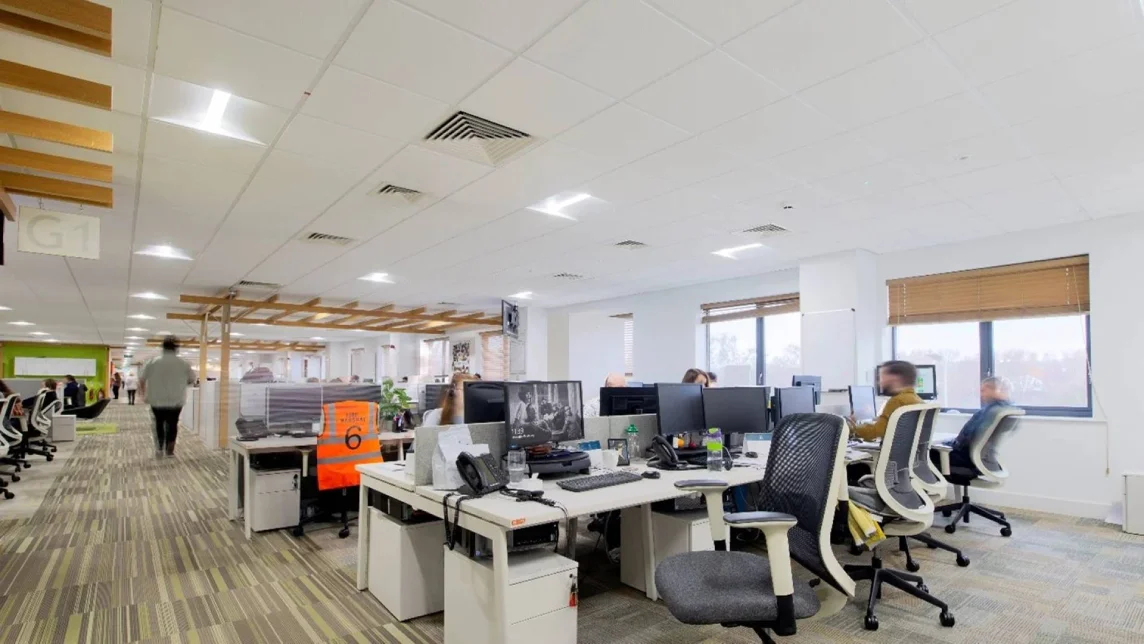
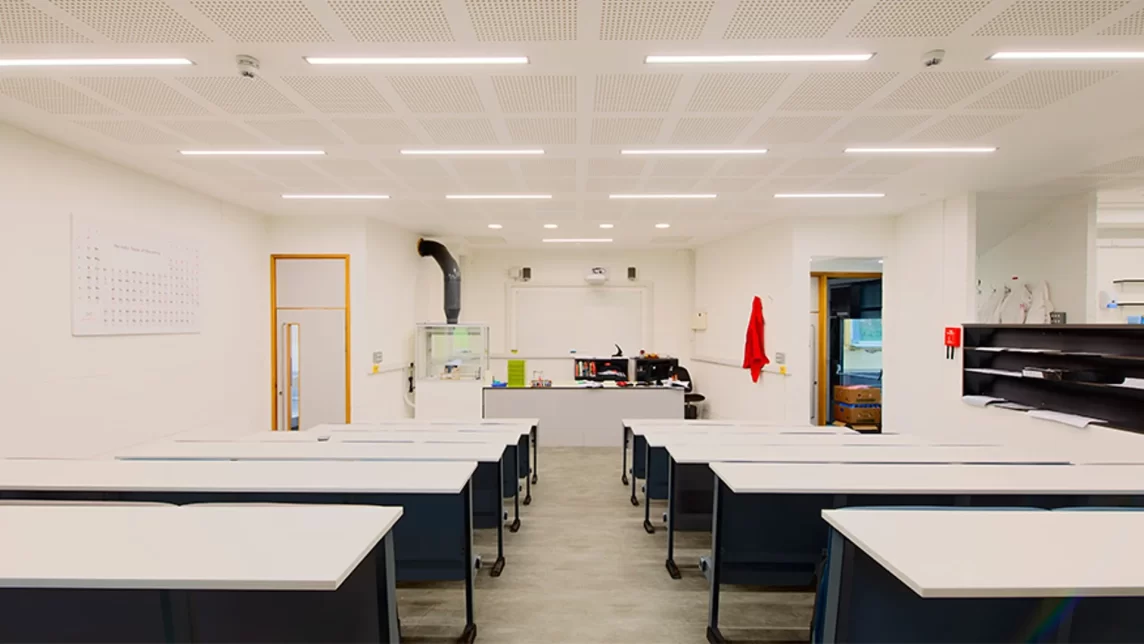
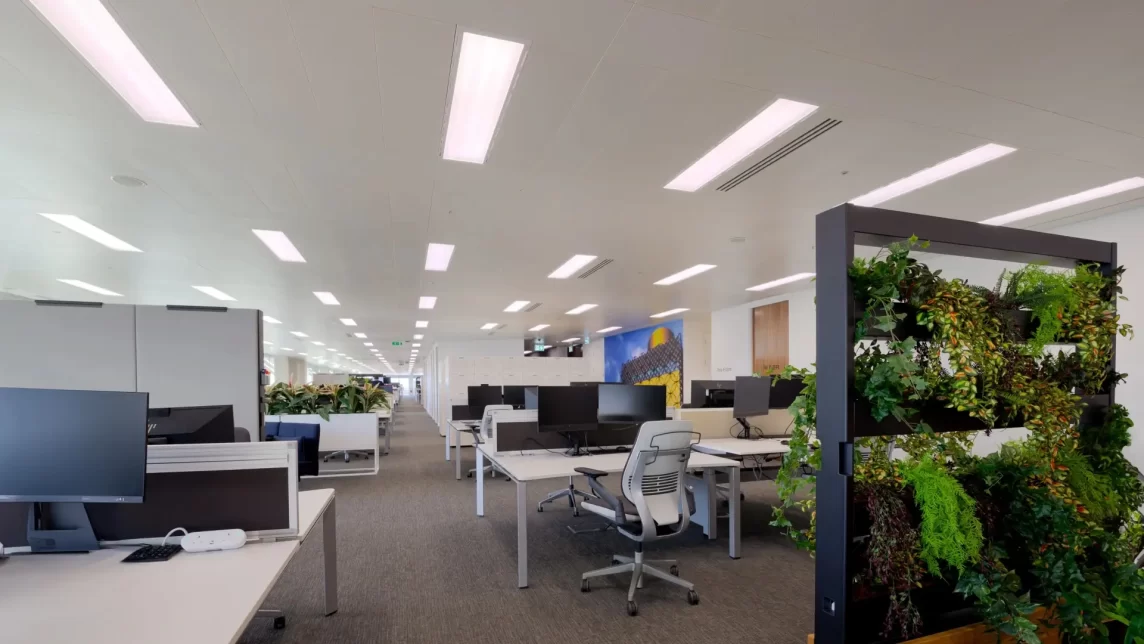
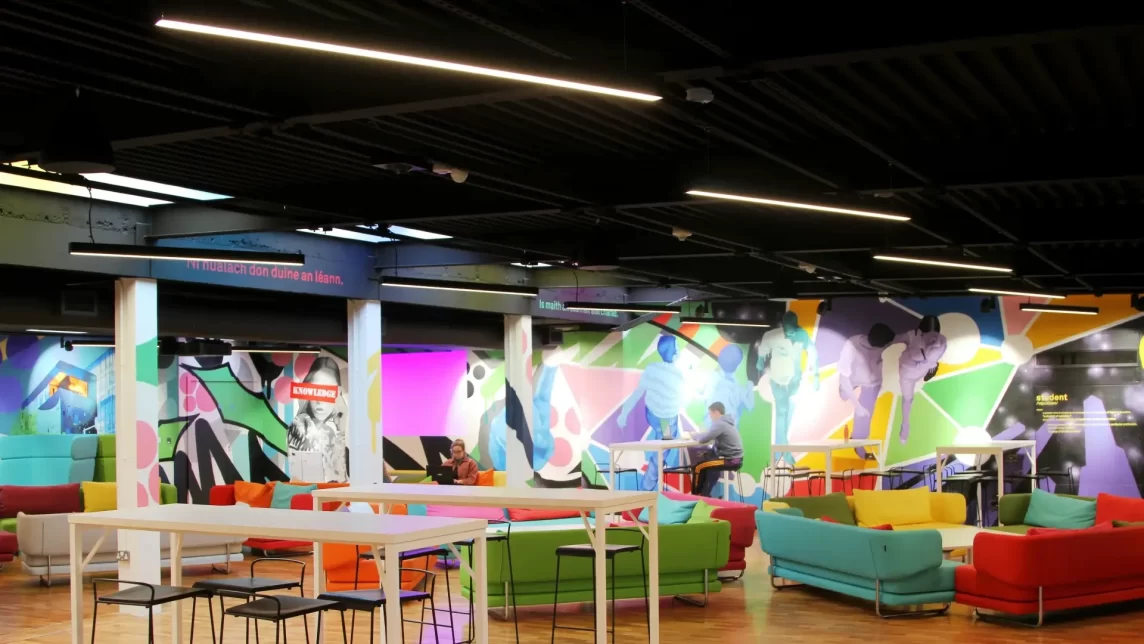
Smart lighting solutions have been around for some time now. However, they’ve only been embraced by the residential sector. Only a small percentage of businesses and educational establishments are choosing to utilise them within their offices, warehouses, or classrooms.
Why are businesses so afraid of making this transition?

Smart lighting solutions are widely seen as a costly affair. On a personal level, it is much simpler to set lighting levels in your own home than for a whole business. This simplicity must be designed to carry over into commercial application.
This investment is undoubtedly worth it. The latest generation of smart systems greatly reduces a facilities’ cost-base, infrastructure, and personnel. In the midst of a 54% rise in energy bills, now more than ever these measures are needed to see as much ROI as possible.
Intelligent Control
The biggest offering that solutions such as intelligent control systems add is a level of flexibility that is unmatched by standard LED controls. These measures can ensure modern office, classroom and warehouse spaces are adaptable enough to be prepared for an unpredictable future.
Systems embedded with sensors can substantially reduce energy consumption by ensuring that lighting is not used unnecessarily. Wireless networks go even further, creating a grid which connects all fittings into a centralised control system.
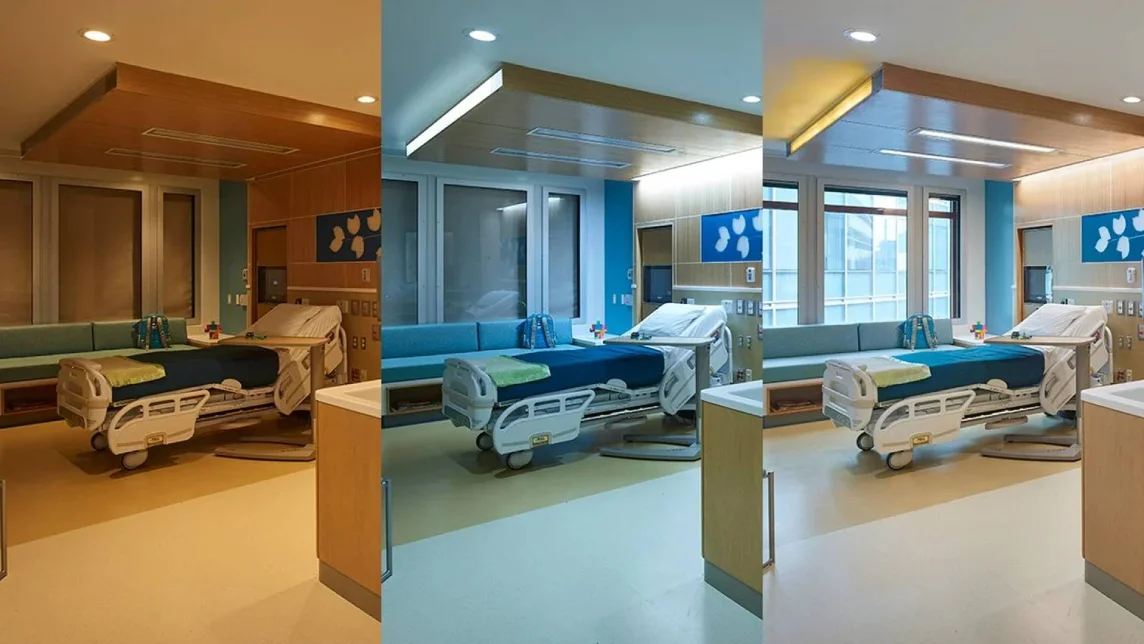
This allows for lighting settings that suit the preferences of different groups of occupants.
Tamlite’s own system of Vision Lighting Controls, provides more than just energy savings. The major benefit to businesses is that it’s easily scalable and quick to install. Wireless nodes communicate with one another between rooms, floors, and buildings, allowing the network to be scaled up across entire estates if required.
Frequently Asked Questions
While LED technology is inherently energy-efficient, pairing it with innovative lighting controls significantly increases potential savings. Industries that have adopted this combination have reported reductions in energy bills ranging from 60% to 80%. These savings contribute directly to decarbonisation goals and help businesses mitigate rising energy costs.
Businesses often avoid the transition because they perceive smart lighting as a costly affair. Additionally, there is a common belief that setting up smart lighting for an entire business is as complex as the residential experience is simple; therefore, ease of use and simplicity must be designed into commercial applications to encourage adoption.
Intelligent control systems provide unmatched flexibility, allowing office, classroom, and warehouse spaces to adapt to unpredictable future needs.
Systems embedded with sensors reduce energy consumption by ensuring lights are not used unnecessarily.
Wireless networks create a grid that connects all fittings into a centralised system.
Centralised controls allow for lighting settings that can be customised to suit the preferences of different occupant groups.
Tamlite’s Vision Lighting Controls offer benefits beyond energy savings, specifically focusing on scalability and ease of installation.
The system uses wireless nodes that communicate between rooms, floors, and buildings.
This network design allows the system to be scaled up across entire estates if required.