
Estimated reading time: 9 minutes
Key Takeaways
- Fluorescent lighting leads to high energy costs and poor wellbeing; switching to LED lighting offers significant advantages in energy savings.
- LED lights last 20 times longer and can save between 60% and 80% in energy consumption compared to fluorescent systems.
- The built environment contributes 25% to the UK carbon footprint; effective energy measures, including LED lighting, can drastically reduce this.
- Upgrading street lamps to LED can save approximately £70 million annually, highlighting the importance of well-designed lighting solutions.
- Incorporating smart controls and fixtures with high optical control further enhances energy efficiency and reduces waste.
In a time where no one can be guaranteed a fixed price on energy for very long, it makes sense to look for new ways to save. Businesses are set to experience the impact of the volatile energy market for at least the next two years. For those responsible for the management and operation of buildings, it is causing a huge headache.
One place where you can make quick and straightforward changes in order to reduce overall energy usage and lower energy bills, is switching to LED lighting. Switching to LED has many benefits and can be utilised is various ways. Let’s take a look.
Retrofit Lighting
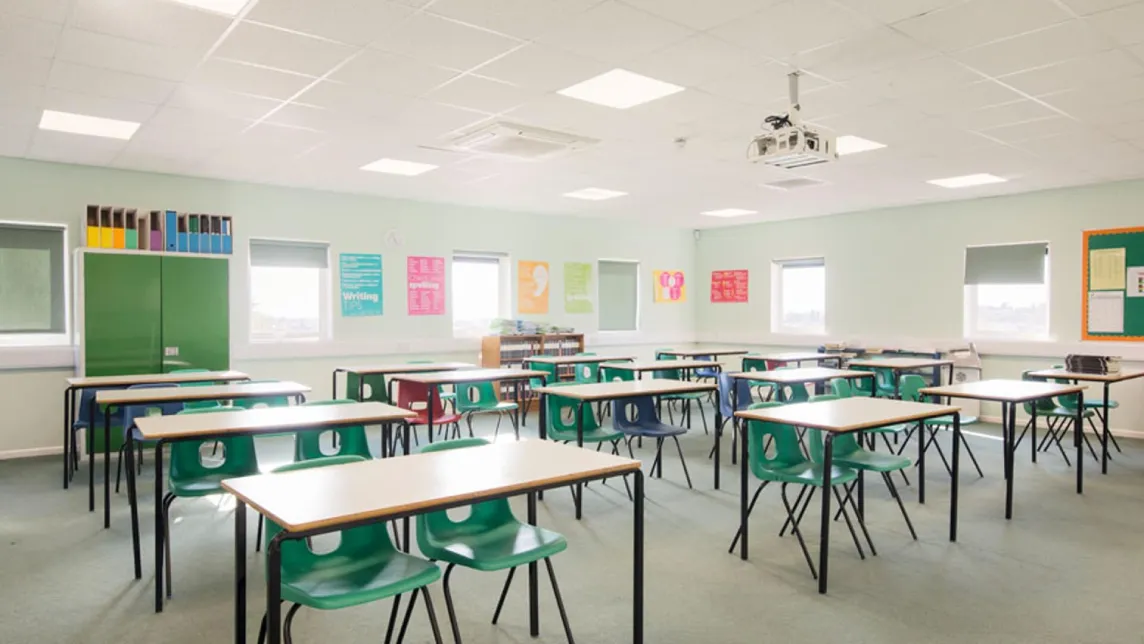
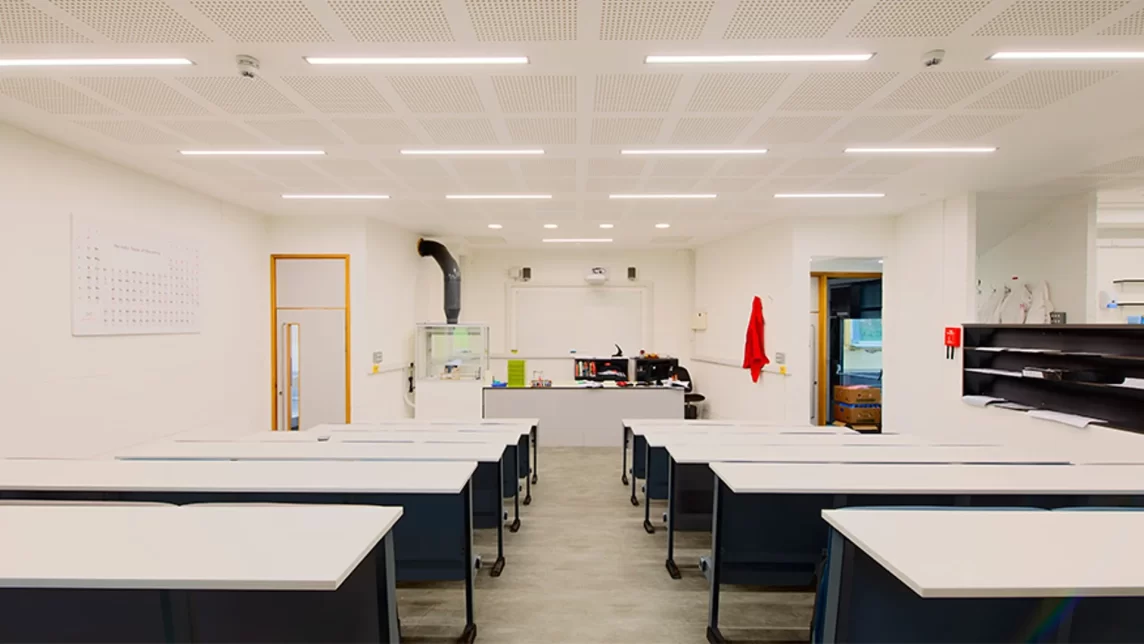
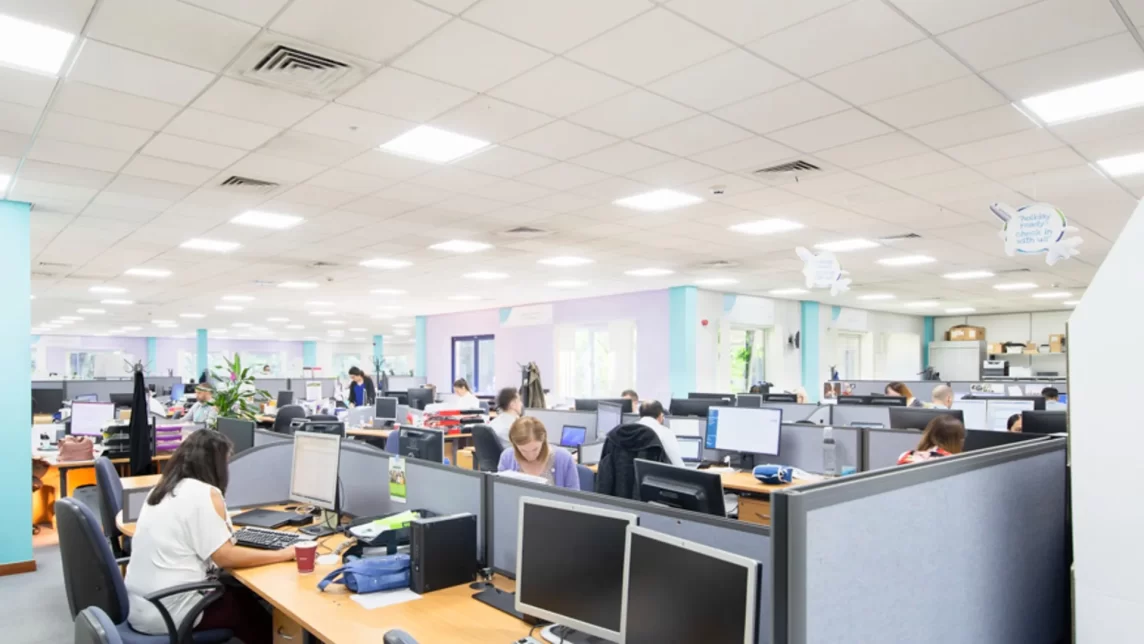
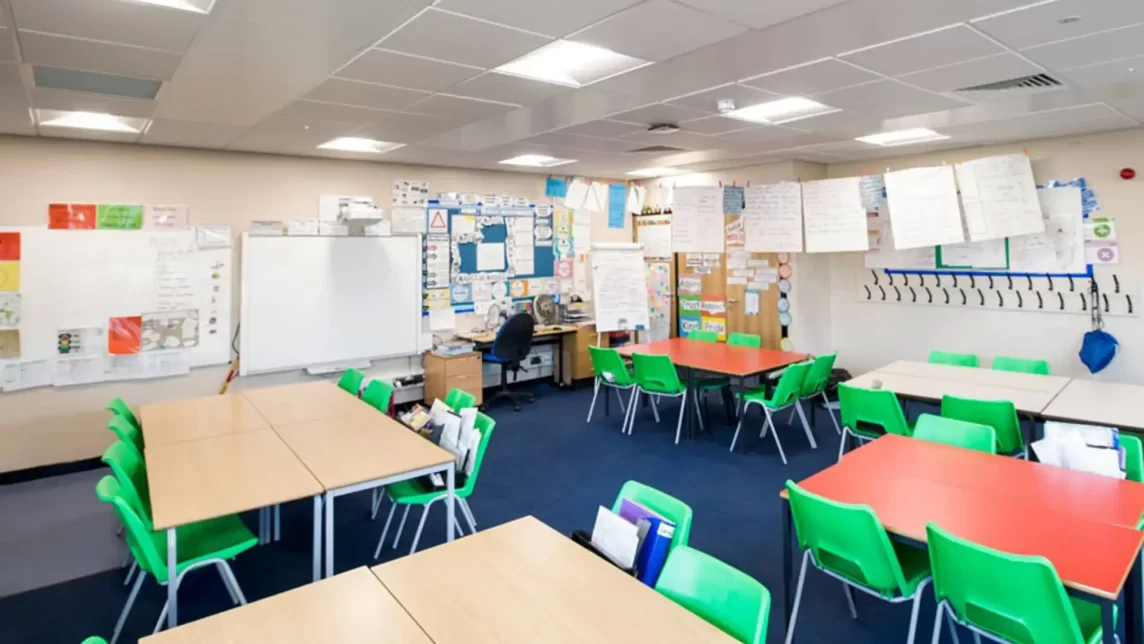
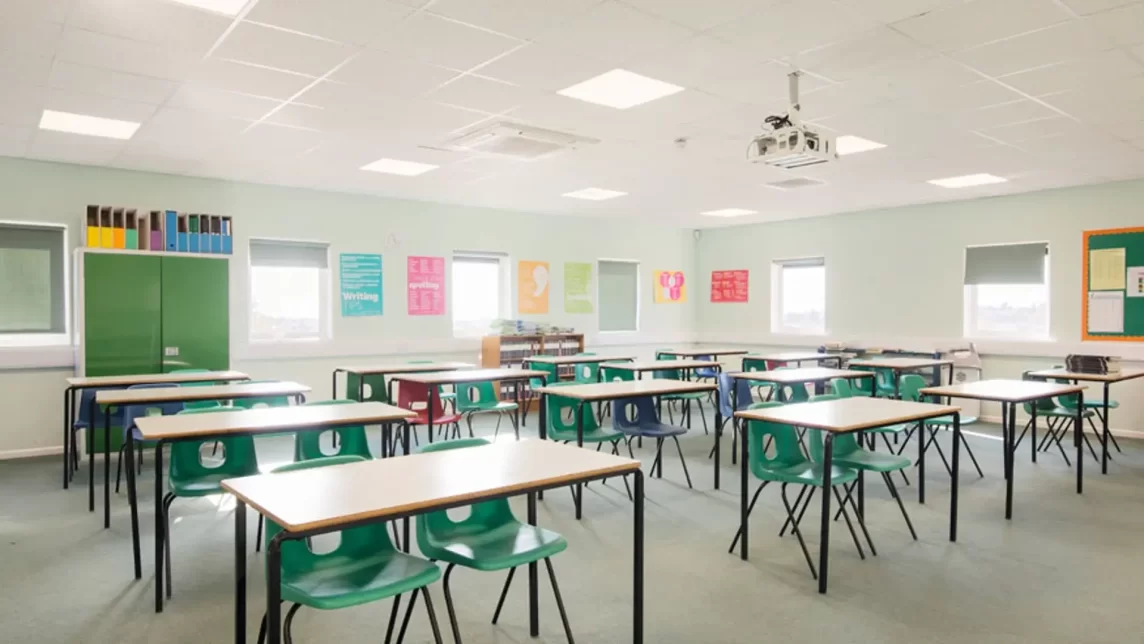
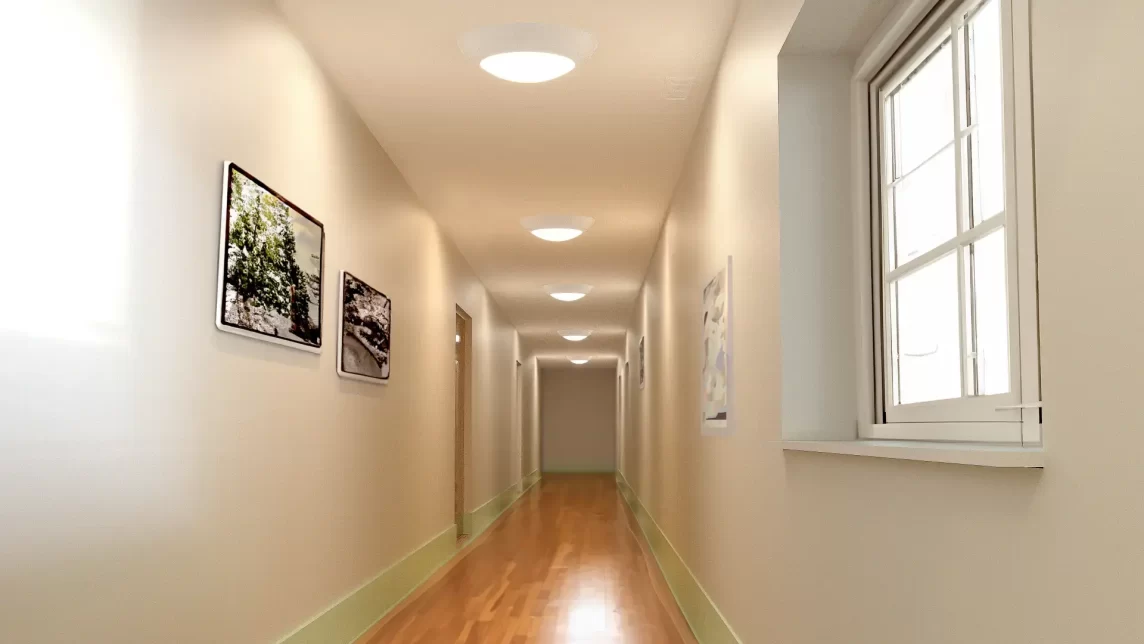
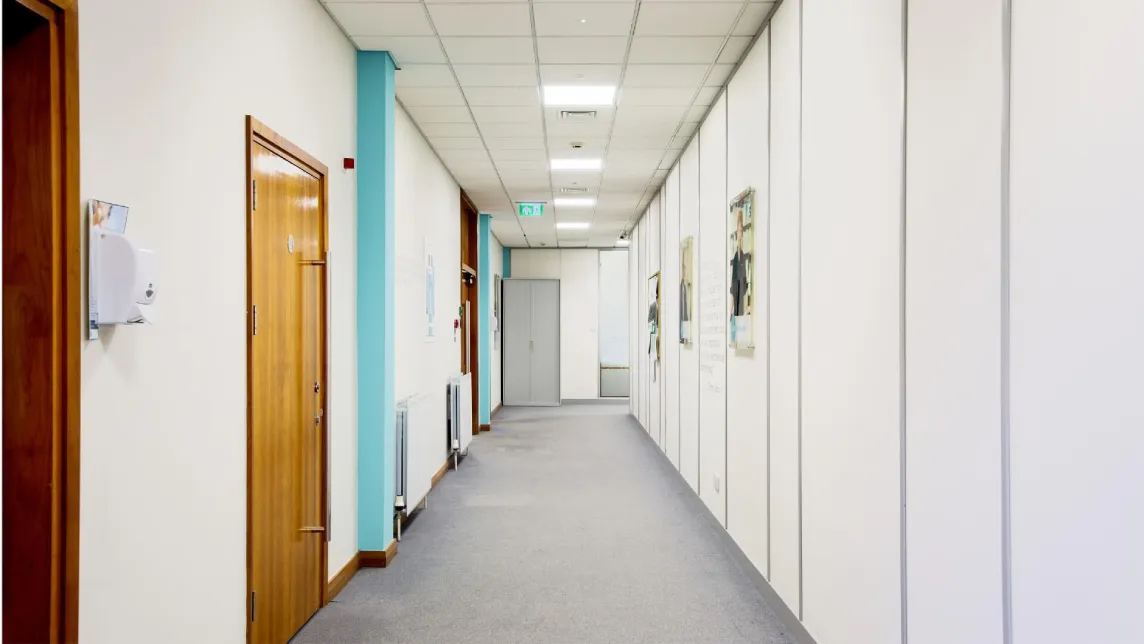
Firstly, if you’re still stuck in the past with fluorescent lighting, then you definitely need to carry on reading. Fluorescent lighting is of a bygone era where all that we thought was ‘let there be light’, and not ‘what do we need light for’ – so luminaires were installed into our office and classroom ceilings and left to over illuminate and in some cases dazzle us, providing headaches, poor concentration, and heavy bills for years – often leading to a decrease in general wellbeing. We had little to no control over it; It controlled us. Limited settings, not easily dimmable, optically poor and although we tried to diffuse it, it was never enough. It wasn’t until about 2008* where it was concluded that, actually, high-efficiency and high-power LEDs were the only way to go.
*On 24 September 2009, Philips Lighting North America became the first to submit lamps in the category to replace the standard 60 W A-19 “Edison screw fixture” light bulb, with a design based on their earlier “Ambient LED” consumer product.
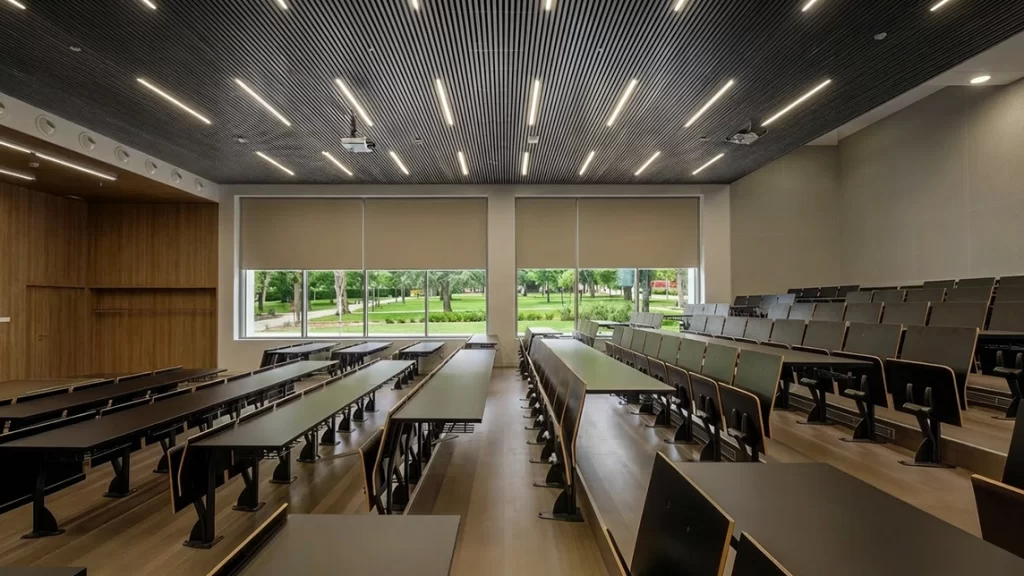
Since then, many buildings around the world have been installed with LED luminaires, and many have been retrofitted to modern standards. But, we still have a long way to go. In fact, in 2023, production of T5 and T8 fluorescent lamps will be phased out of the European market – leaving LED to take full control. This is in accordance with both the Ecodesign and RoHS directives.
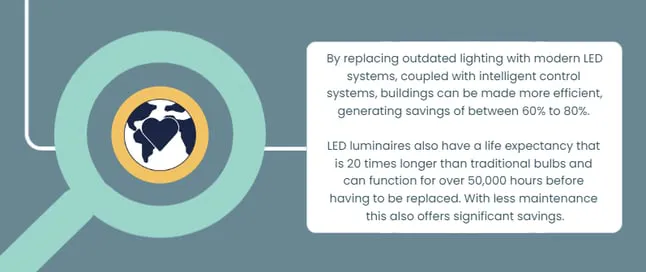
By replacing outdated lighting with modern LED systems, coupled with intelligent control systems, buildings can be made more efficient, generating savings of between 60% to 80%.
LED Life Expectancy
LED luminaires also have a life expectancy that is 20 times longer than traditional bulbs and can function for over 50,000 hours before having to be replaced. With less maintenance this also offers significant savings. When modern technology provides a better user experience, it’s time to upgrade.
Decarbonisation
Another huge consideration must be for our energy efficiency, decarbonisation, and net zero goals. The built environment remains a major contributor to climate change and is directly responsible for 25% of the total UK carbon footprint, and therefore has a critical role to play in the national transition to net zero. The public estate – Britain’s largest property portfolio – generates 2% of the UK’s total carbon emissions. That figure might not seem much, but in 2020, net territorial greenhouse gas emissions in the UK were estimated to be 405.5 million tonnes, so the public estate is generating over 8 million tonnes on its own! – SOURCE
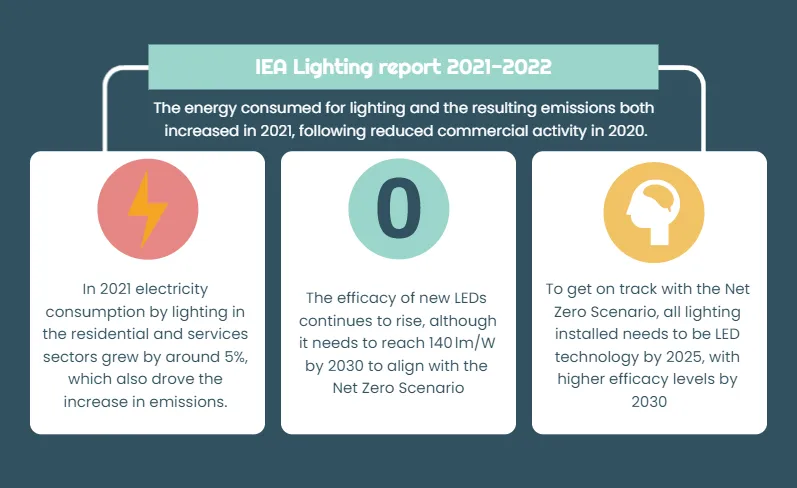
A recent IEA assessment found that efficiency actions in non-residential buildings could reduce a building’s energy use by 20% to 70%, depending on the building type and depth of measures. This includes efficient LED lighting and smart lighting controls.
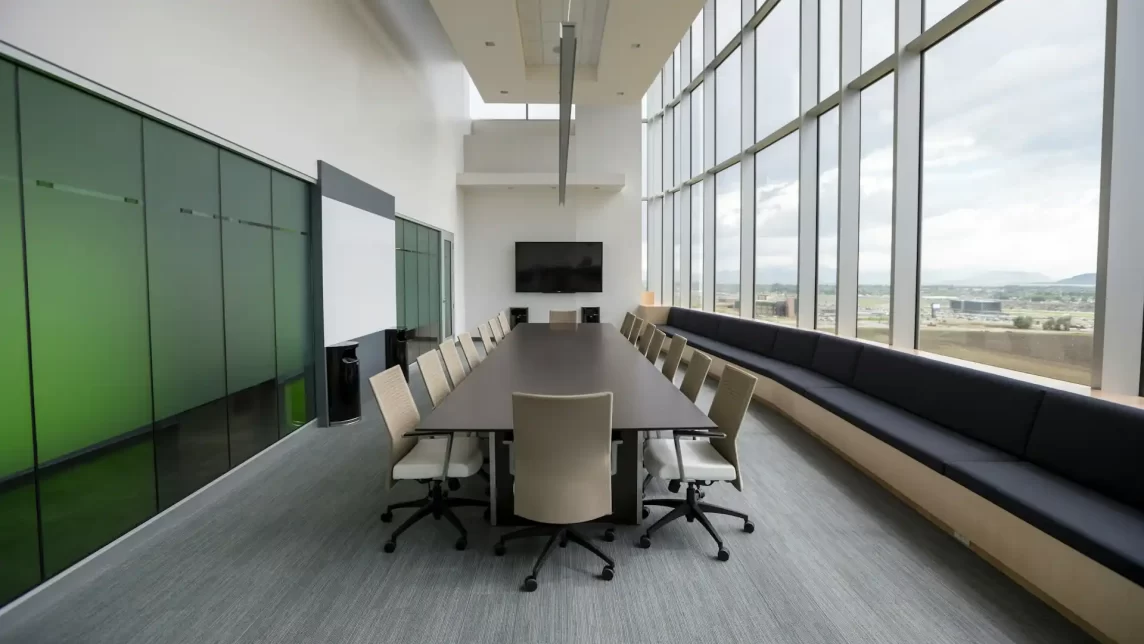
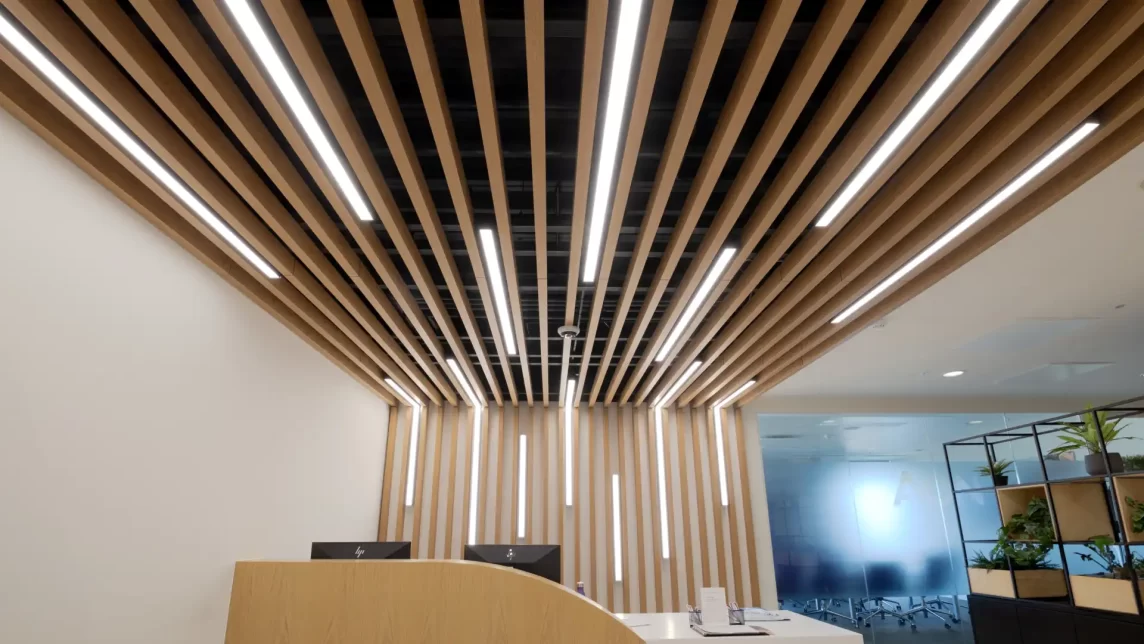
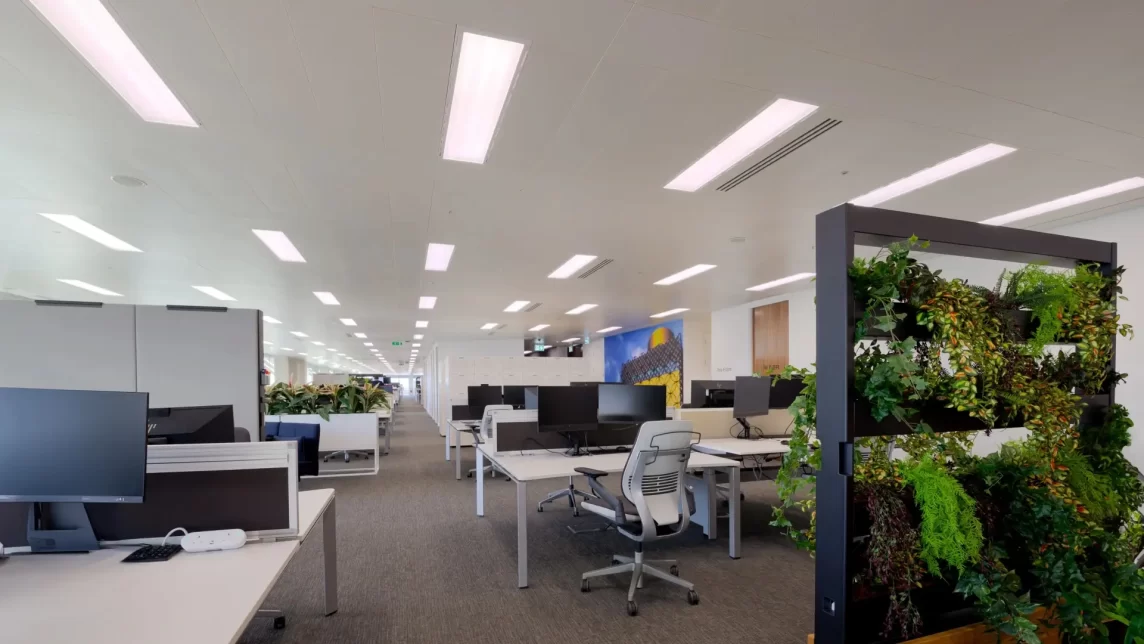
Office Buildings
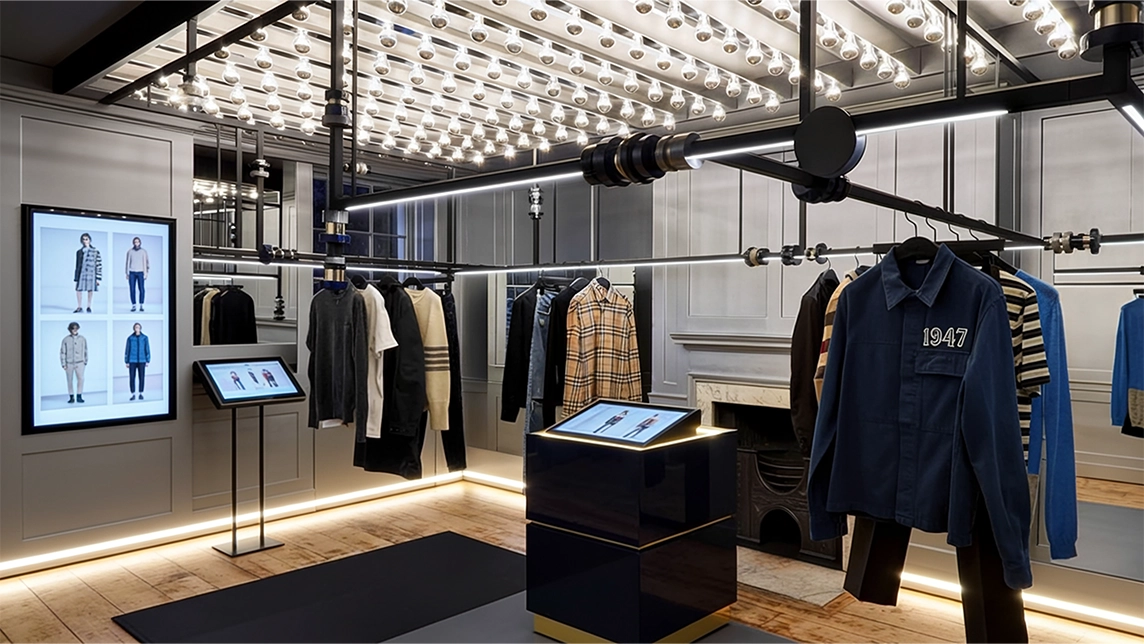
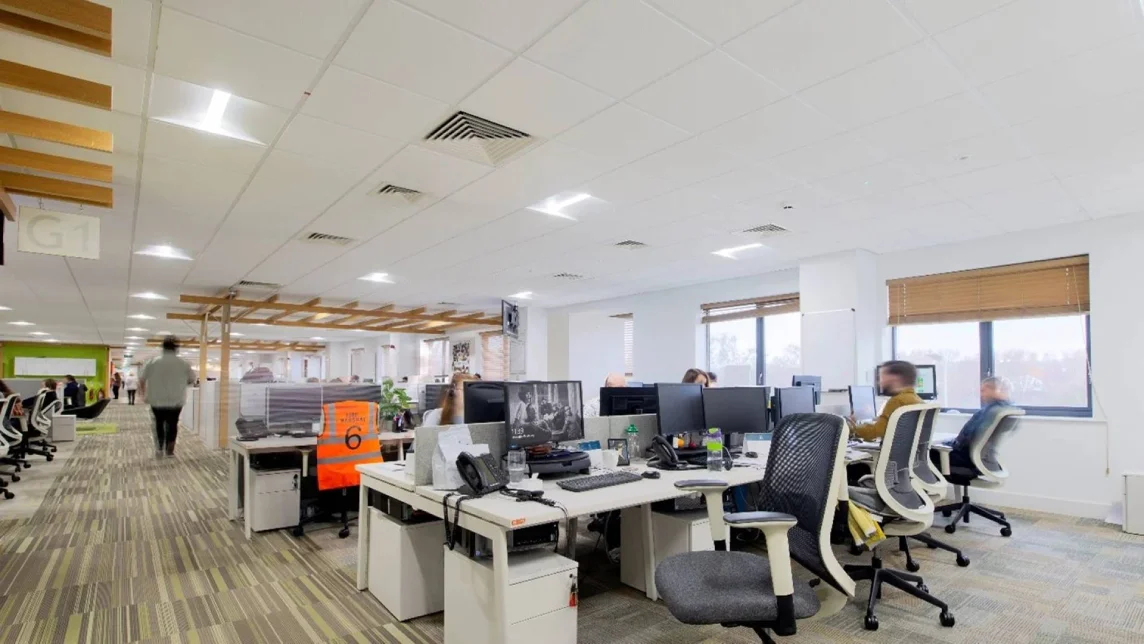
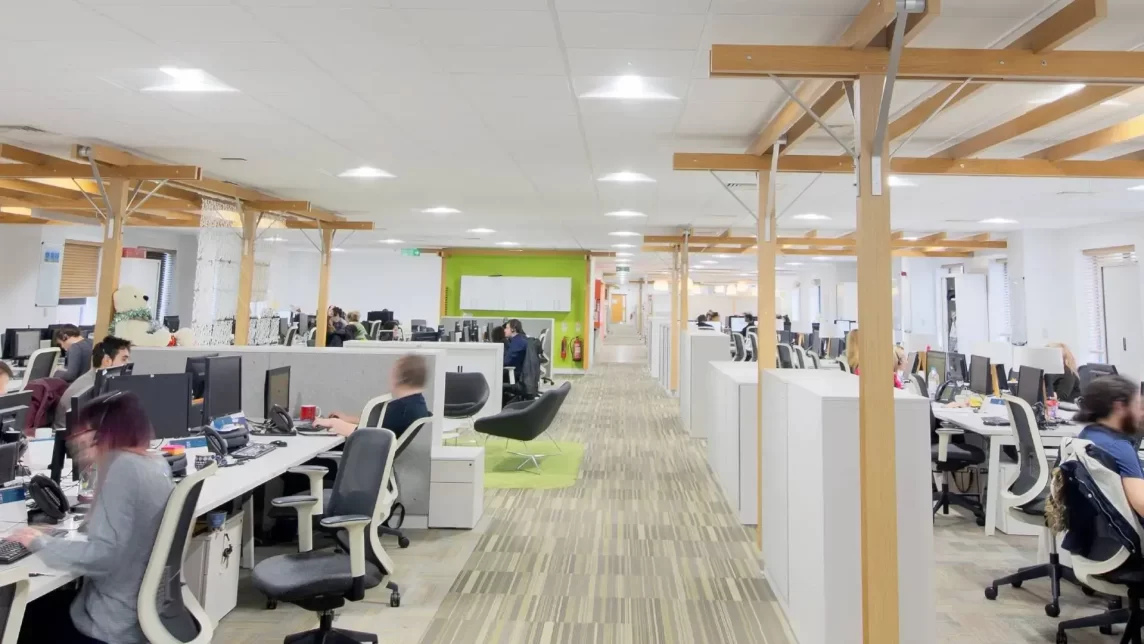
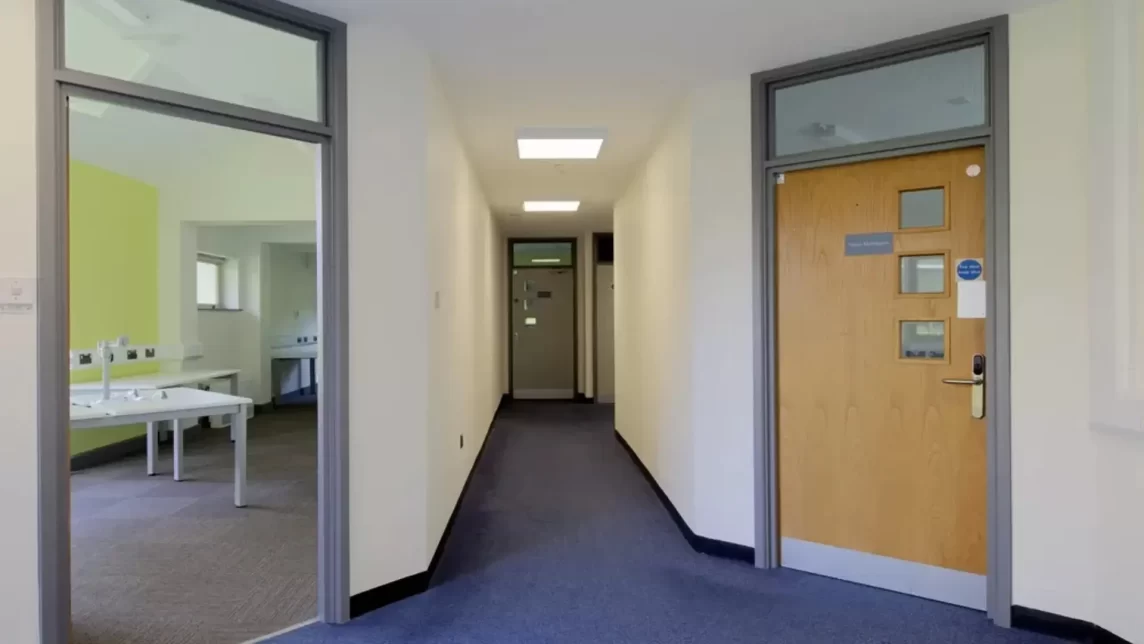
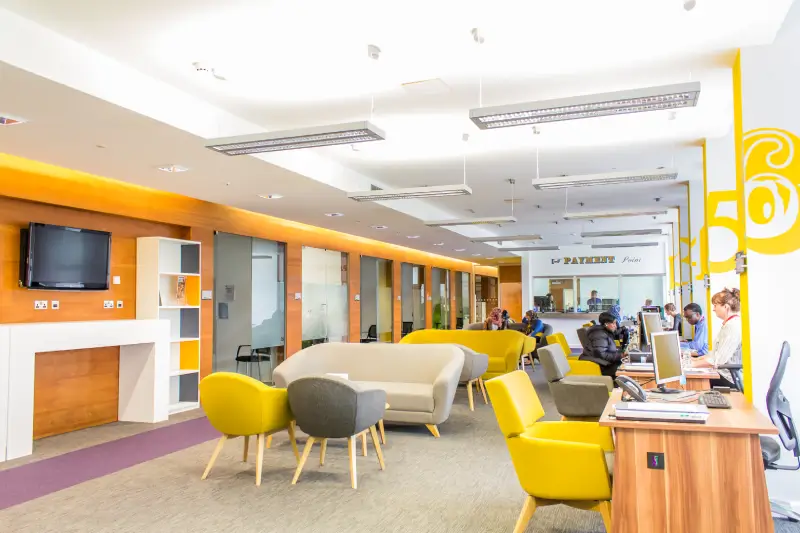
Office buildings demonstrated the lowest energy use intensities, while retail spaces consistently show the highest values across different countries. Retail buildings tend to consume more energy than other commercial buildings like offices or hotels, due to use of more energy-intensive systems, limited ability to reduce energy use through behaviour, and lack of training for operating personnel. This shows the importance of capacity building and behavioural changes for improving actual energy performance of buildings.
Exterior LED lighting
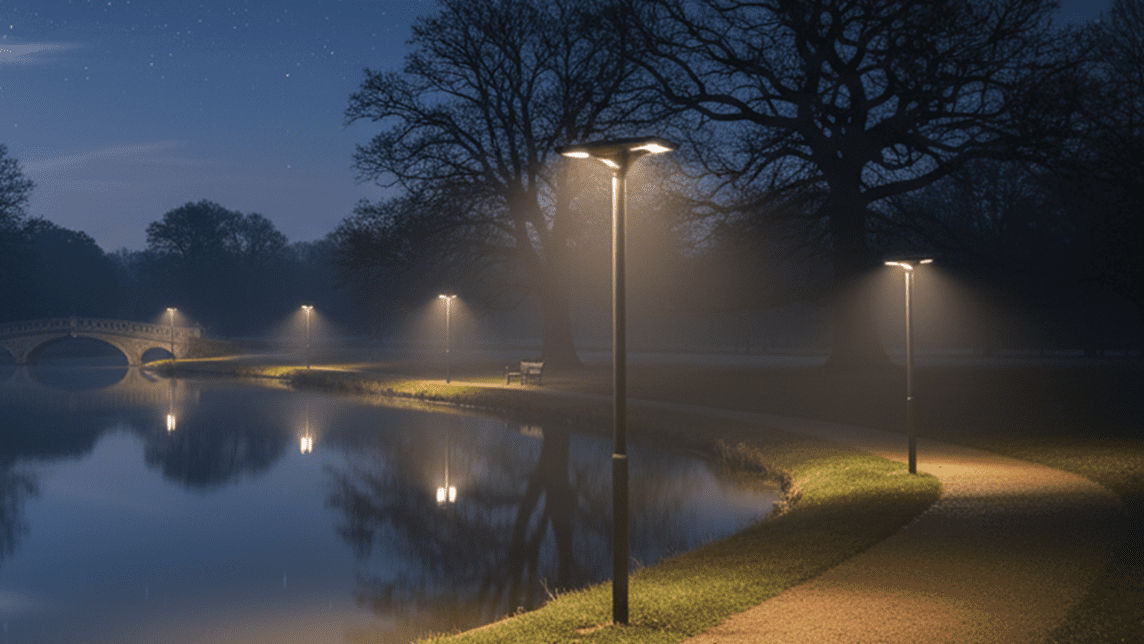
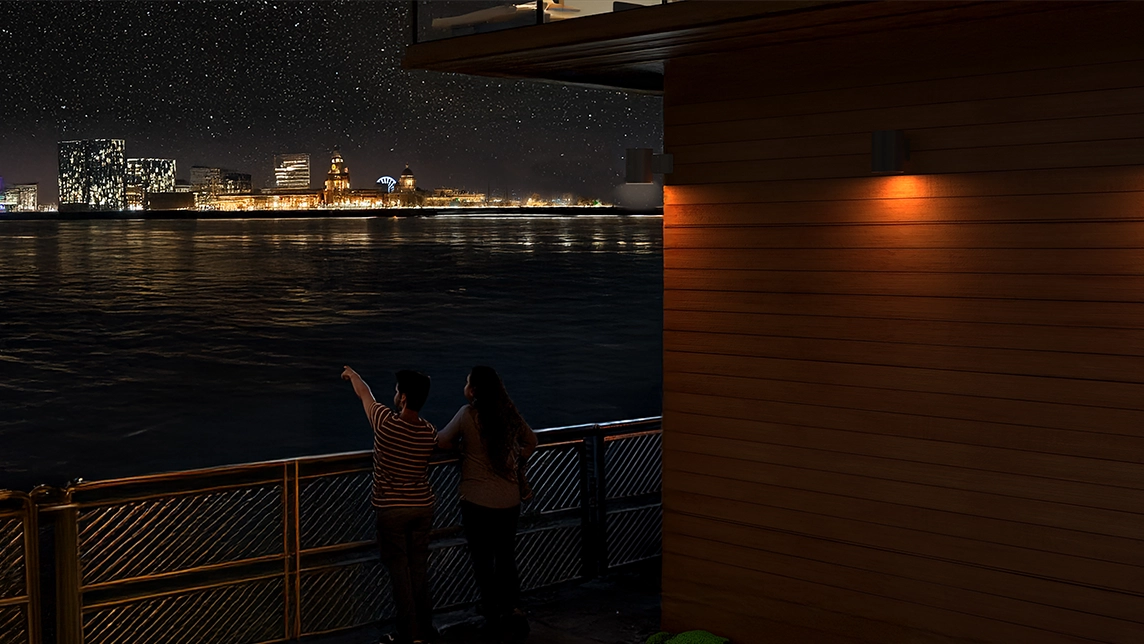
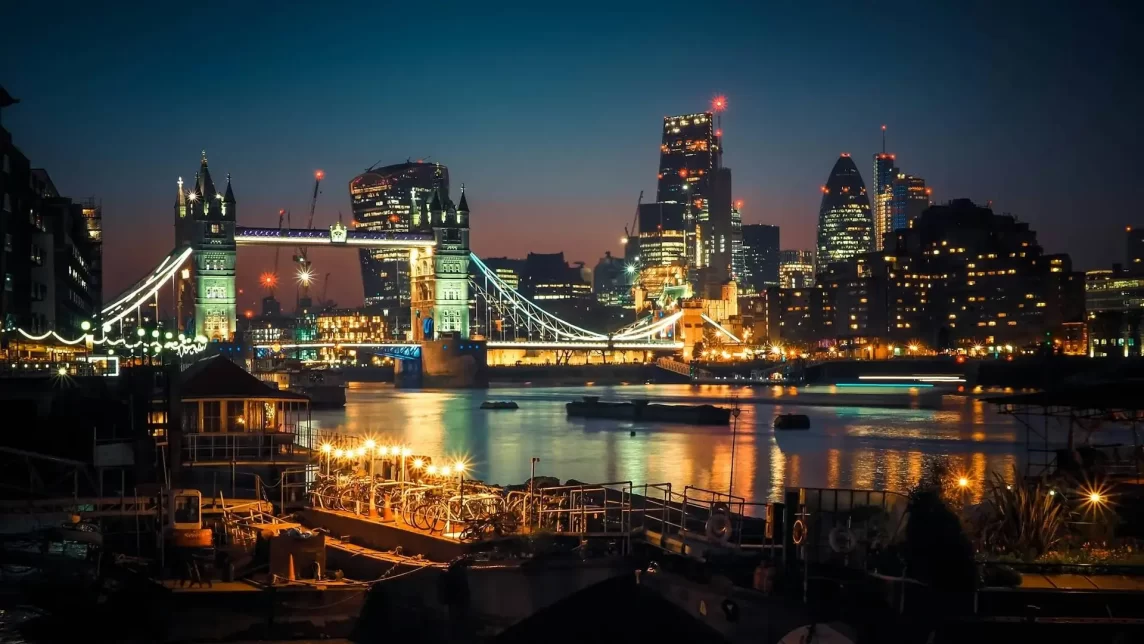
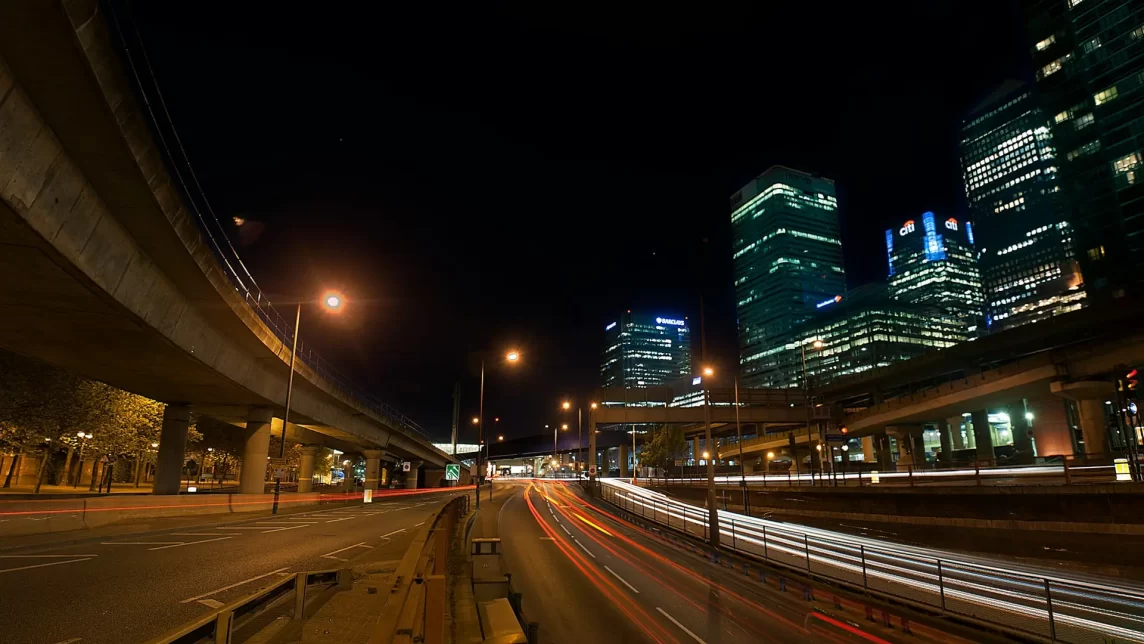
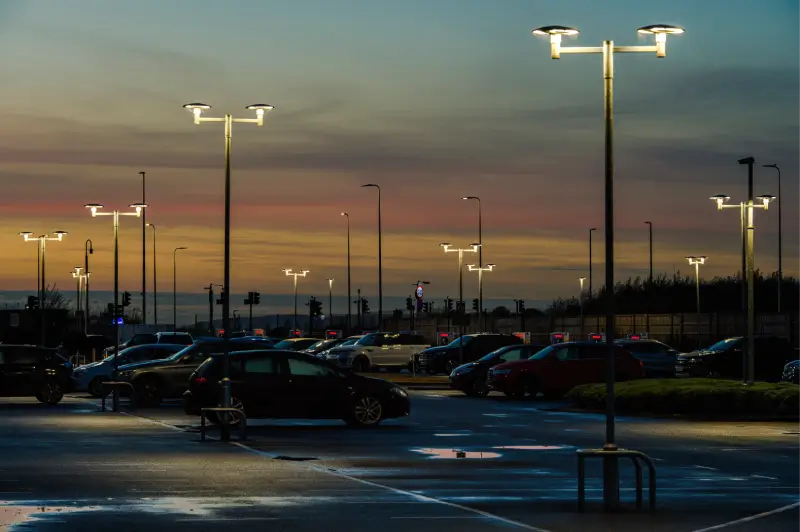
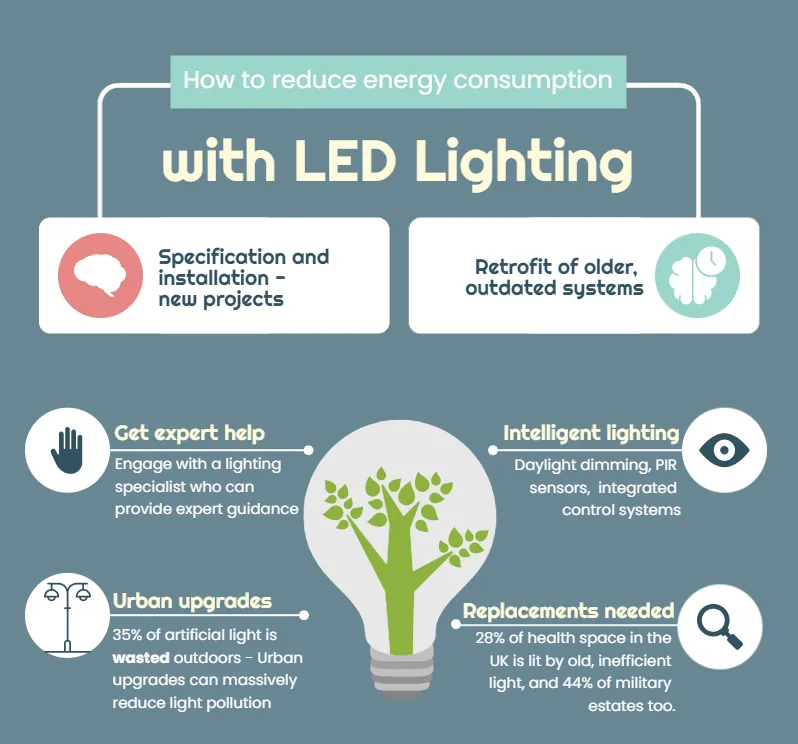
But it’s not just indoors where we can make a difference. The Energy Saving Trust has reported that if every street-lamp in the UK was upgraded to LED, it could save in the region of £70million +.
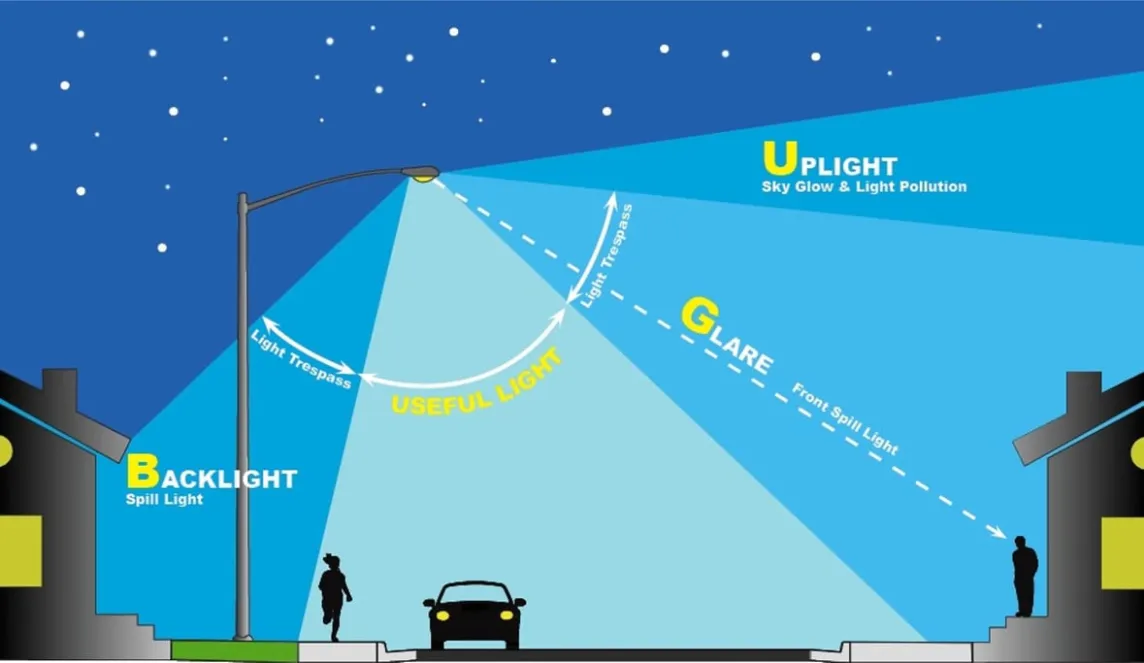
Poor lighting design not only results in energy waste but light spill and light intrusion. The International Dark-Sky Association (IDA) has estimated that 35% of artificial light is wasted by being poorly aimed or unshielded.
One way to deal with unnecessary waste is to use luminaires with high optical control. A luminaire with high optical control will offer a better direction of light and will be more energy efficient (less light waste/spill). This is something that must be brought into consideration when specifying a lighting design and must be considered should the specification of the project change.
Lighting Tips
A few bits that can be done in order to save energy, with the help of LED lighting and technology:
- Replace fluorescent lighting with LED luminaires
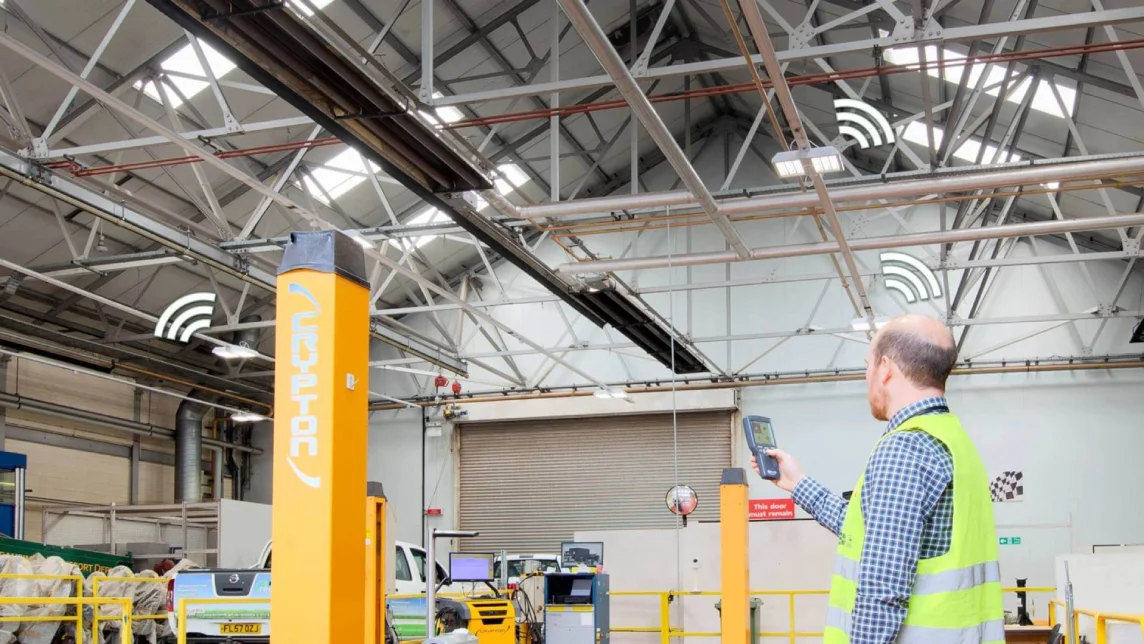
- Use of smart lighting: sensors and timers – Installing sensors or timers can help ensure that lights are only on when needed, which can help reduce energy waste.
- Use dimmers: Dimmers can help you control the brightness of your lights, which can not only make your space more comfortable, but also help save energy.
- Turn off lights when not in use: This may seem like a no-brainer, but turning off lights when they are not needed can make a big difference in terms of energy use – this goes hand in hand with the installation of smart lighting as lights can turn themselves off when a particular area is not in use.
In summary
Public sector organisations who lean towards lighting upgrades will not only reap the benefits from reducing their energy consumption but given the hugely increased energy costs, will also see a significant reduction when it comes to ROI. With the drive towards decarbonisation intensifying, retrofitting outdated lighting will without doubt be a vital step towards reducing environmental impact. Seeking advise and guidance from industry experts will much to the benefit of anyone searching for the answers to energy savings.
Get a FREE lighting energy survey from Tamlite and see exactly how much you will save.
Frequently Asked Questions
Fluorescent lighting belongs to a bygone era, often over-illuminating spaces, causing dazzle, headaches, and poor concentration, whilst delivering heavy energy bills and decreasing general wellbeing. Furthermore, in accordance with Ecodesign and RoHS directives, the production of T5 and T8 fluorescent lamps is being phased out of the European market, leaving LED to take full control. Replacing outdated lighting with modern LED systems coupled with intelligent controls can generate energy savings of between 60% and 80%. Additionally, LED luminaires have a life expectancy that is 20 times longer than traditional bulbs and can function for over 50,000 hours, offering significant savings through reduced maintenance.
The built environment is a major contributor to climate change and is directly responsible for 25% of the total UK carbon footprint, giving it a critical role in the national transition to net zero. The public estate, Britain’s largest property portfolio, generates 2% of the UK’s total carbon emissions. Based on estimated 2020 figures, this 2% accounts for over 8 million tonnes of greenhouse gas emissions on its own. An IEA assessment found that efficiency actions in non-residential buildings, including efficient LED lighting and smart controls, could reduce a building’s energy use by 20% to 70%.
While office buildings demonstrate the lowest energy use intensities, retail spaces consistently show the highest values across different countries. Retail buildings tend to consume more energy than other commercial buildings like offices or hotels due to several distinct factors:
The use of more energy-intensive systems.
A limited ability to reduce energy use through occupant behaviour.
A lack of training for operating personnel.
This highlights the critical importance of capacity building and behavioural changes for improving the actual energy performance of buildings.
Energy waste outdoors is a substantial issue; the Energy Saving Trust reports that upgrading every UK streetlamp to LED could save in the region of £70 million+. Furthermore, the International Dark-Sky Association (IDA) estimates that 35% of artificial light is wasted by being poorly aimed or unshielded, resulting in light spill and light intrusion. To deal with this unnecessary waste, projects must use luminaires with high optical control. These luminaires offer a better direction of light and eliminate light waste by ensuring illumination only covers the intended area, a factor that must be prioritised when specifying or changing a lighting design.